I just completed a multi-year thru hike (MYTH) of the Pacific Crest Trail (PCT). It took three years. I hiked 1840 miles in 2021, 733 miles in 2022, and 122 miles in 2023. The only reason I had to hike in 2023 was a wildfire closure at the north end of the PCT in 2022. During the past two years, I've also thru hiked other, shorter US trails. I hiked the Benton MacKaye Trail (GA, NC, TN) and the Tuscarora Trail (VA, WV, MD, PA) in 2022 plus the Ozark Highlands Trail (AR) in 2023. I hope to hike the Long Trail (VT) next year and the Colorado Trail at some point in the future. Please note, all content on this site is copyright.
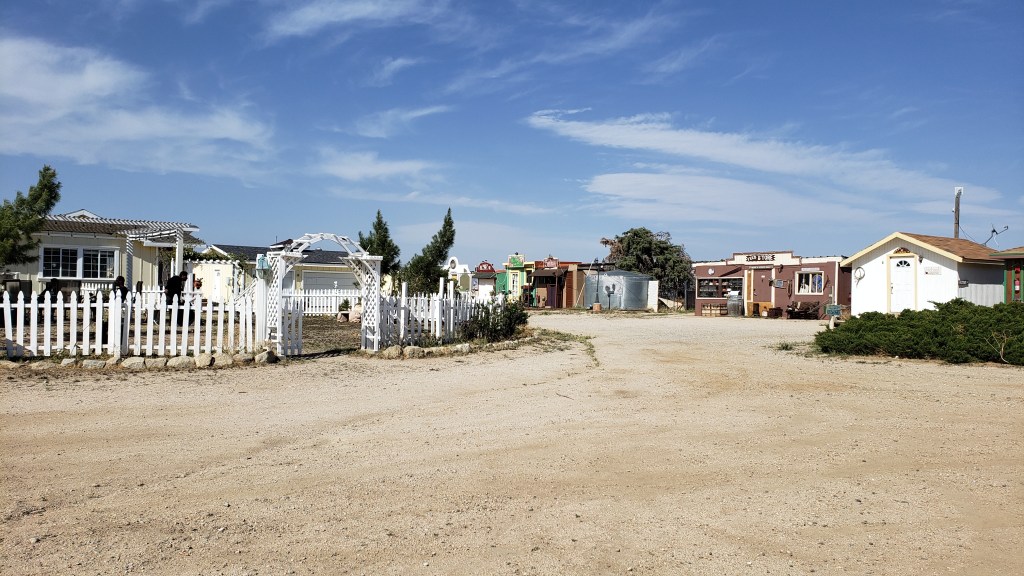
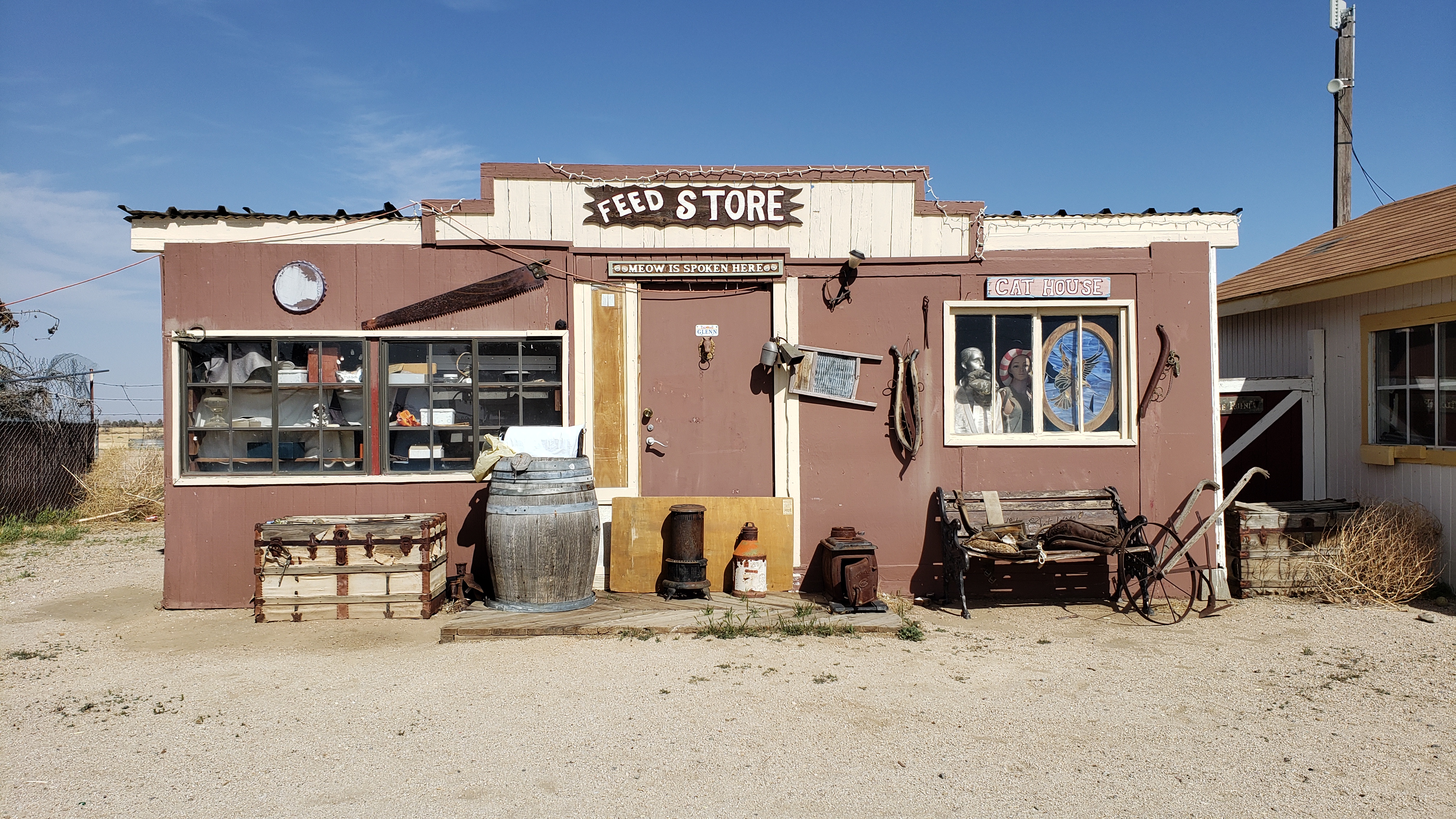
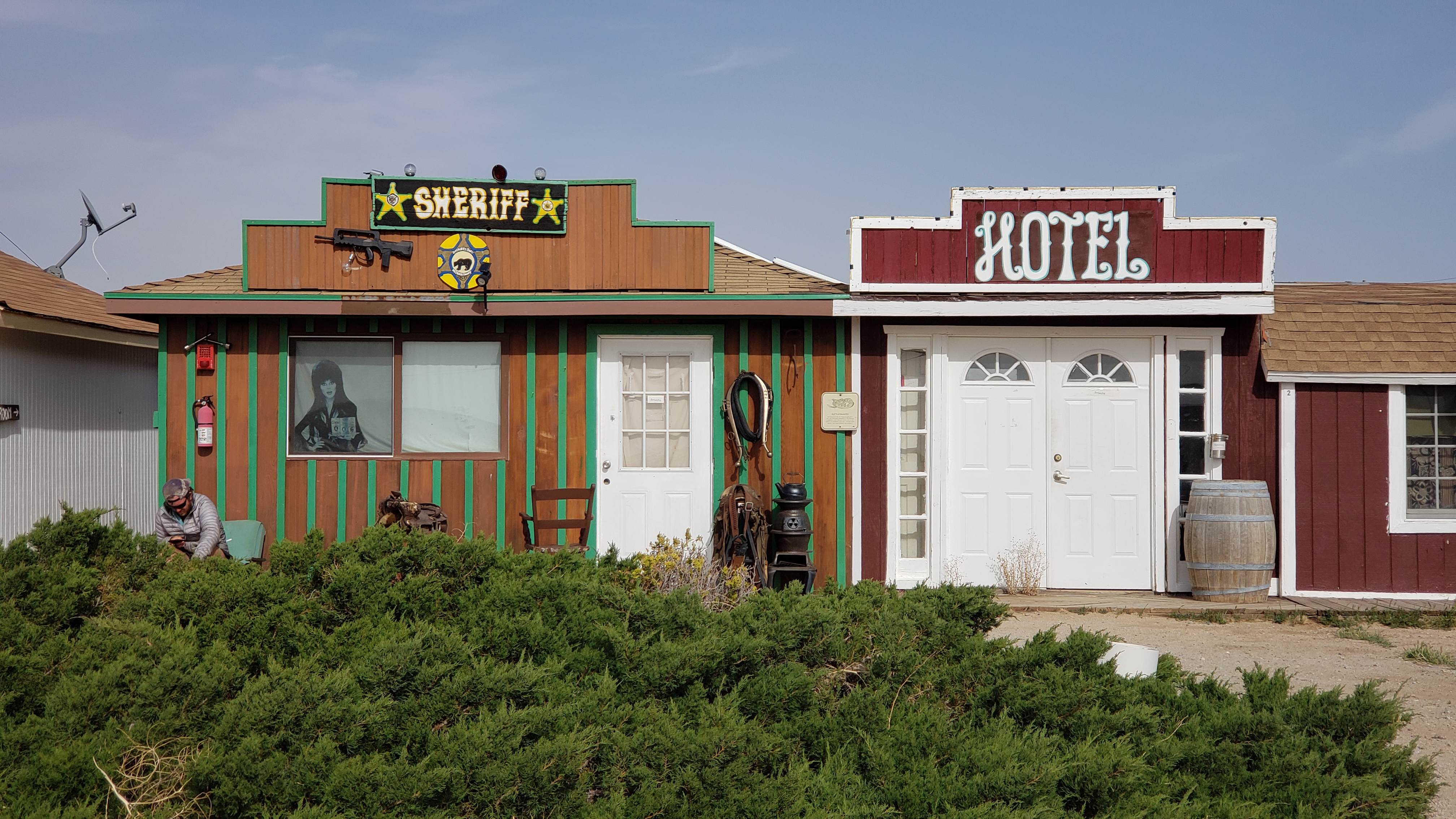
I made it across Antelope Valley, aka “The Desert,” and I’m spending the night at Hikertown. It’s a very odd place. Part hostel, part commune, part carnival fun house? I’m not sure how to describe it. Here are a few photographs:
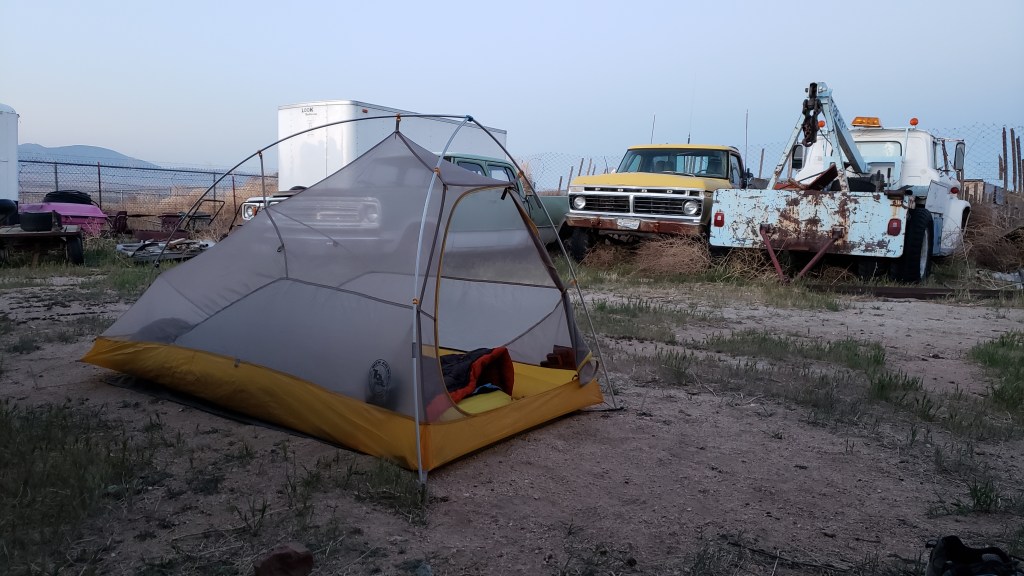
Some of the little buildings have beds inside them. Unfortunately, they’re all occupied, so I’ll have to sleep on the ground in my tent. C’est la vie.
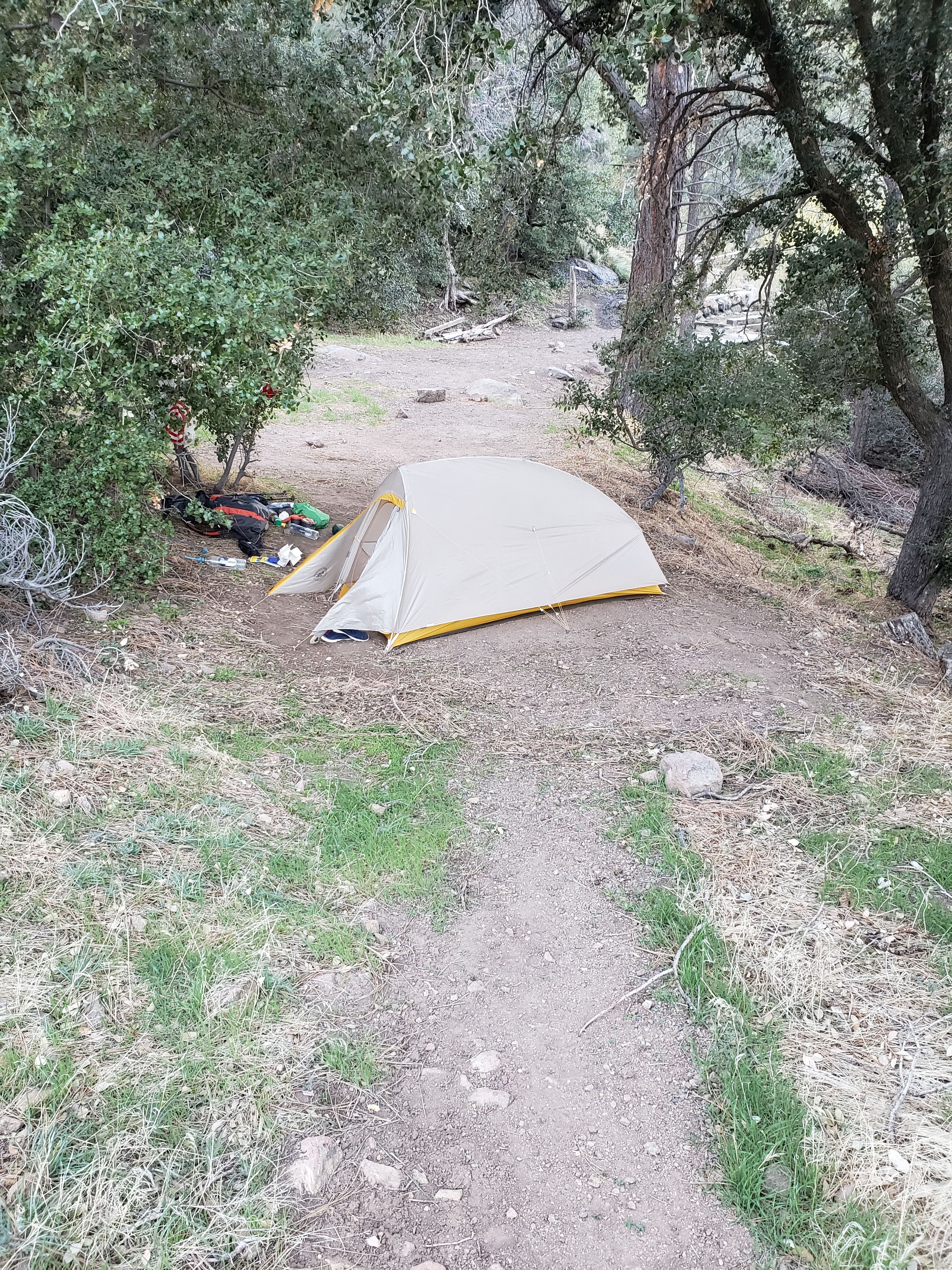
I’m camping next to the other old jalopies
I may not have a bed for the night, but I did get a hot shower, so I’m satisfied.
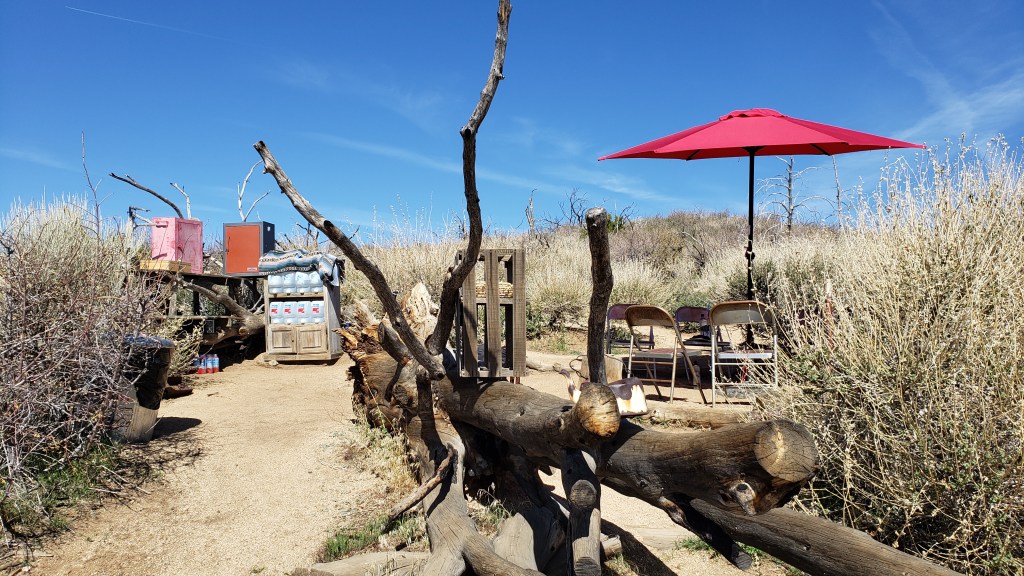
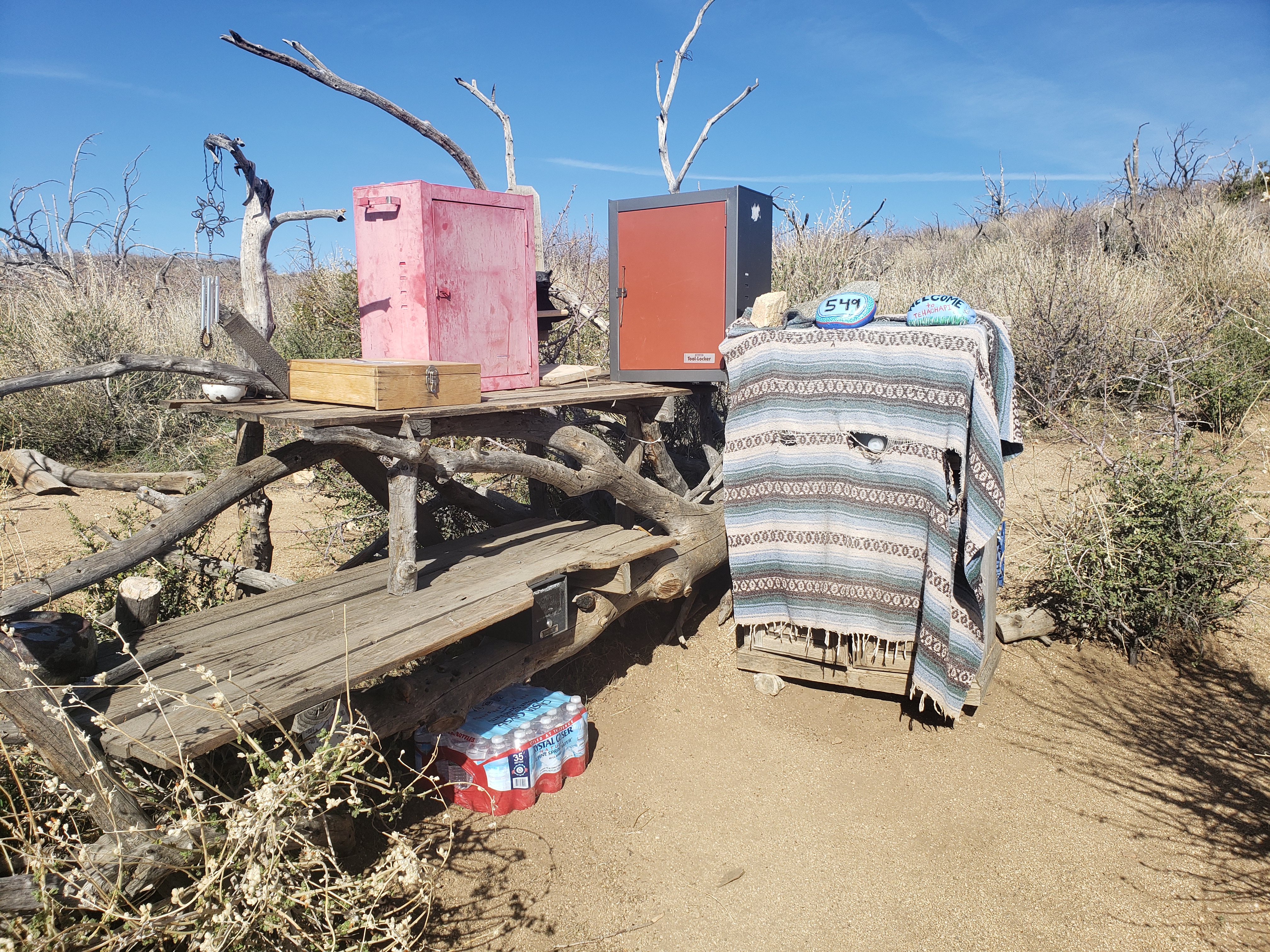
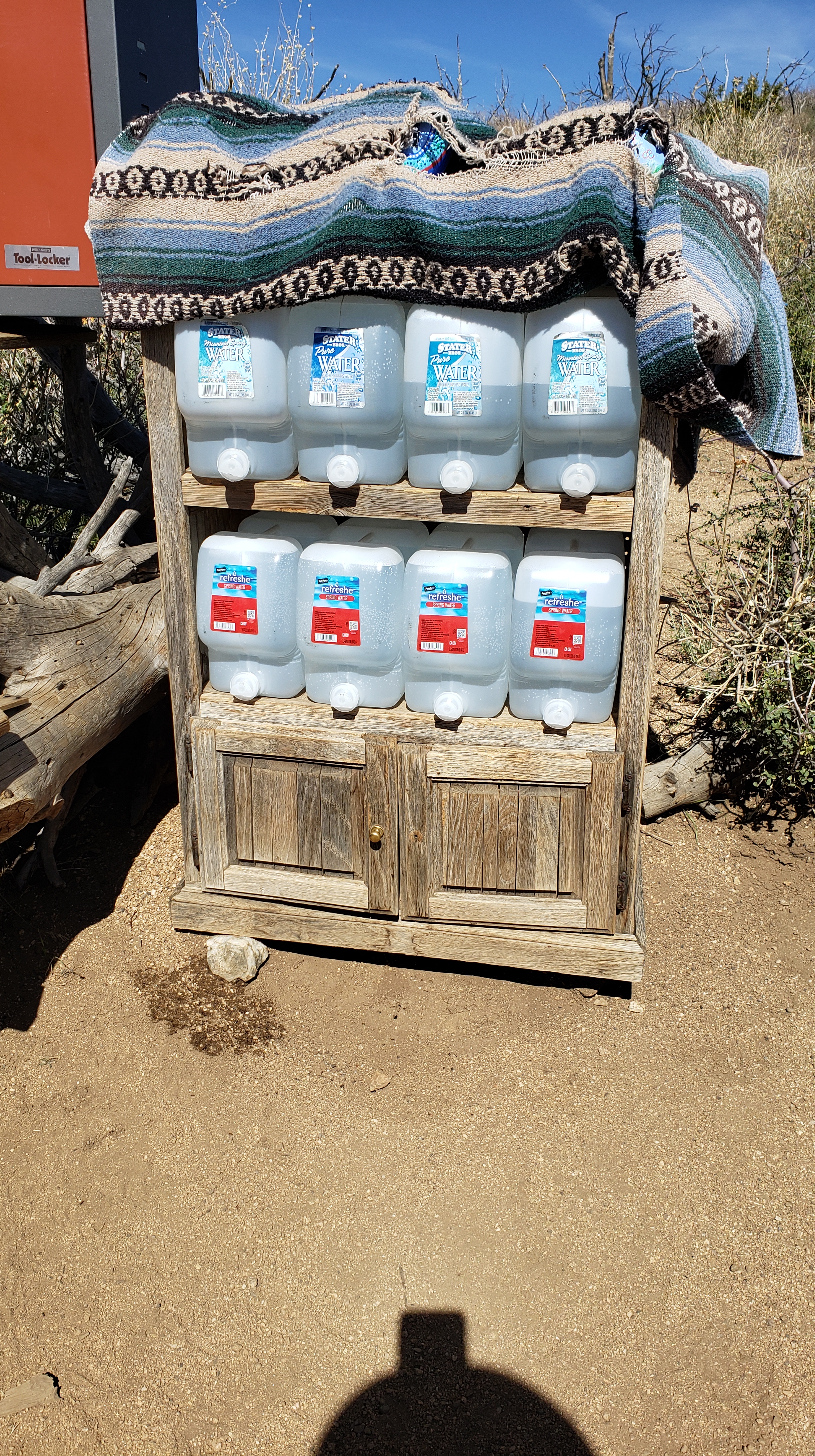
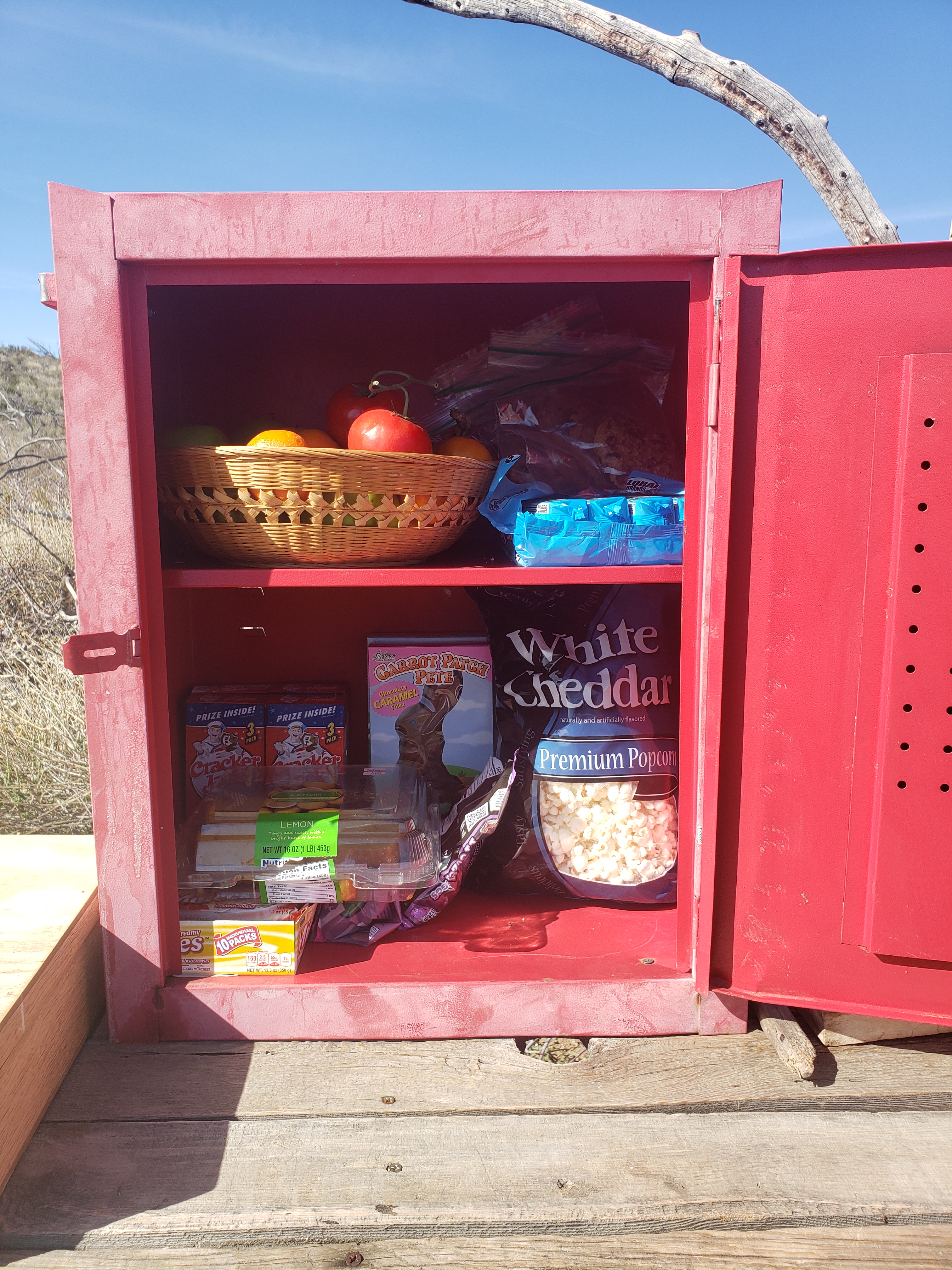
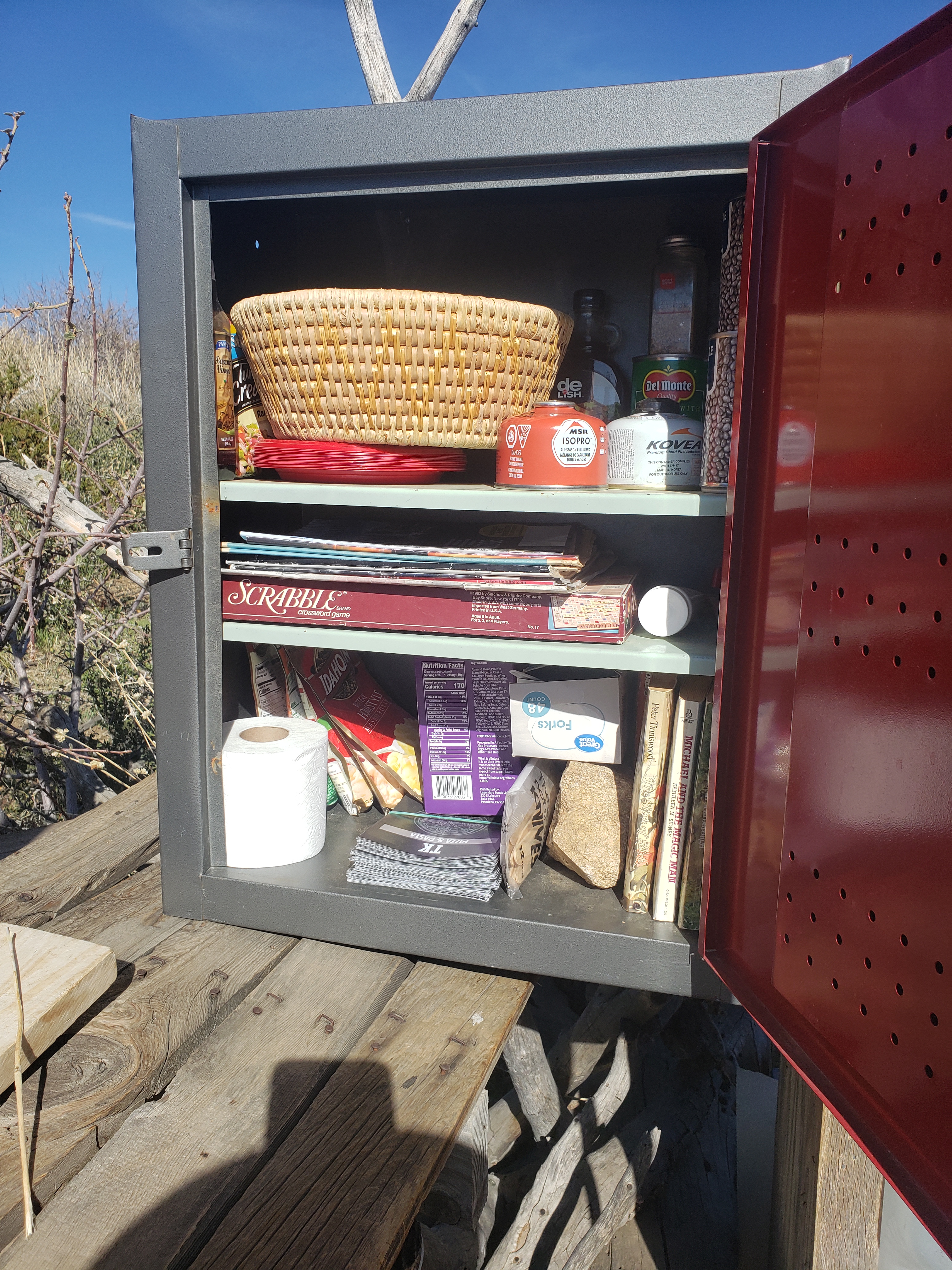
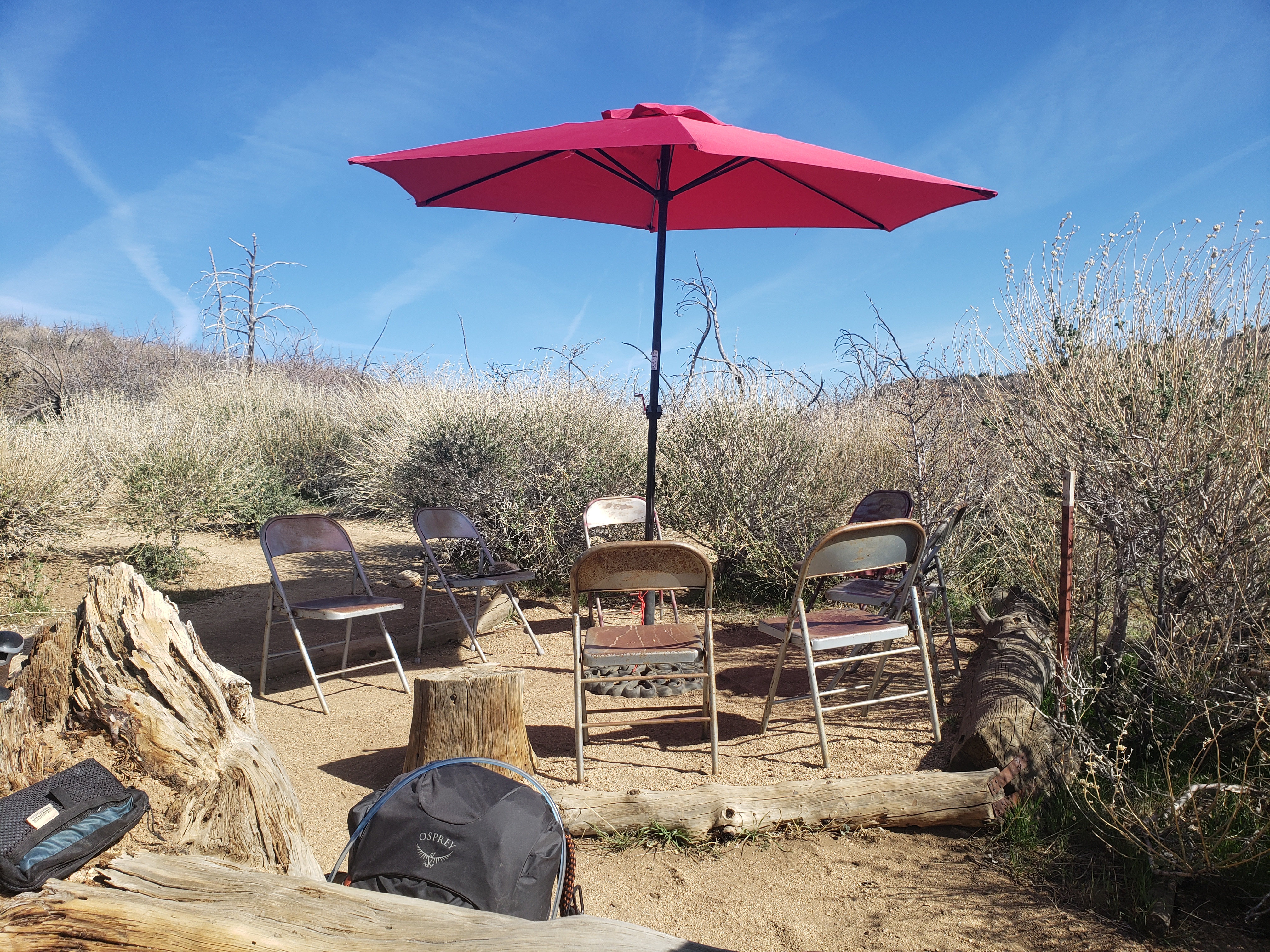
Occasionally in life and on the trail, something will completely overwhelm you in the sweetest, most wonderful way. Cafe 549 at mile 549 of the PCT (counting from Mexico) is the place. It’s seemingly in the middle of nowhere, but actually at the end of a jeep road, which explains how all this water, food, cookies, candy, popcorn, fruit, magazines, books, Scrabble game, fuel canisters, folding chairs, and patio umbrella got here.
And did I mention 5G cellphone reception and an incredible view? Enjoy the pictures.
In the first 6.5 days of my hike, I covered 86.7 miles of the trail from Walker Pass to Tehachapi. That’s 13.3 miles per day.
My shortest day was the first day when I covered about 5 miles in 3.5 hours, climbing the entire way.
My longest day was the last day when I covered 16.1 miles in 8 hours. That included a long downhill stretch at the end.
Allowing for breaks, my normal hiking pace is about 1.5 to 2 miles per hour. But if there is a steep climb, I may struggle to complete one mile in an hour.
The first 3.5 days, I was exhausted all the time. The fourth day, I started to find my hiking legs. By the fifth day, I was truly enjoying myself.
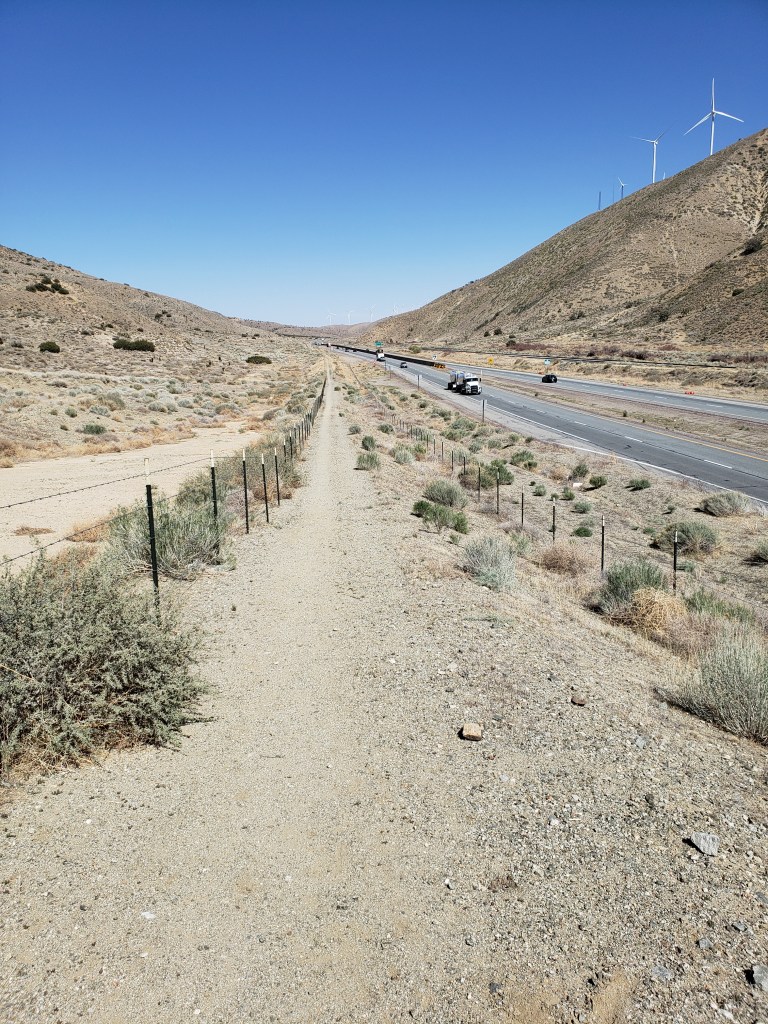
After a zero day today in Tehachapi, I’ll be back on the trail tomorrow morning. The next major road crossing will be in 47 miles. That’s Route 138 which connects Aqueduct. The I-5 near the top of the Tejon Pass with Lancaster. Part of the way, I will be walking on top of a buried portion of the California Aquaduct.
There’s little shade along this entire section. Sometimes hikers will hike the southern portion at night to avoid high temperatures. Fortunately for me, the weather report is calling for temperatures in the 70’s. Nonetheless, it can be brutal in the sun even at these temperatures. I’m glad its also supposed to be … you guessed it, windy.
Here are some photos from my first week.
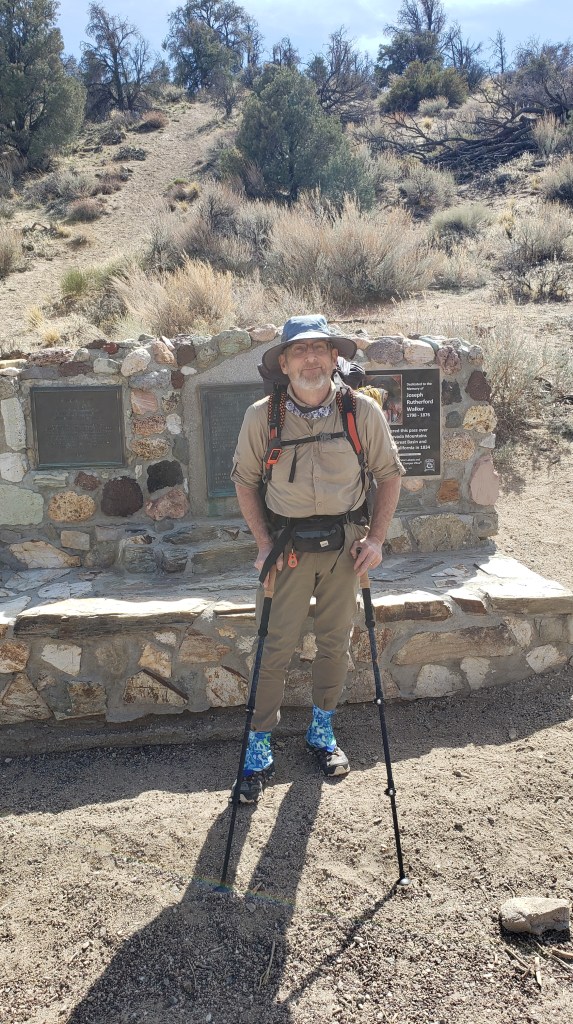
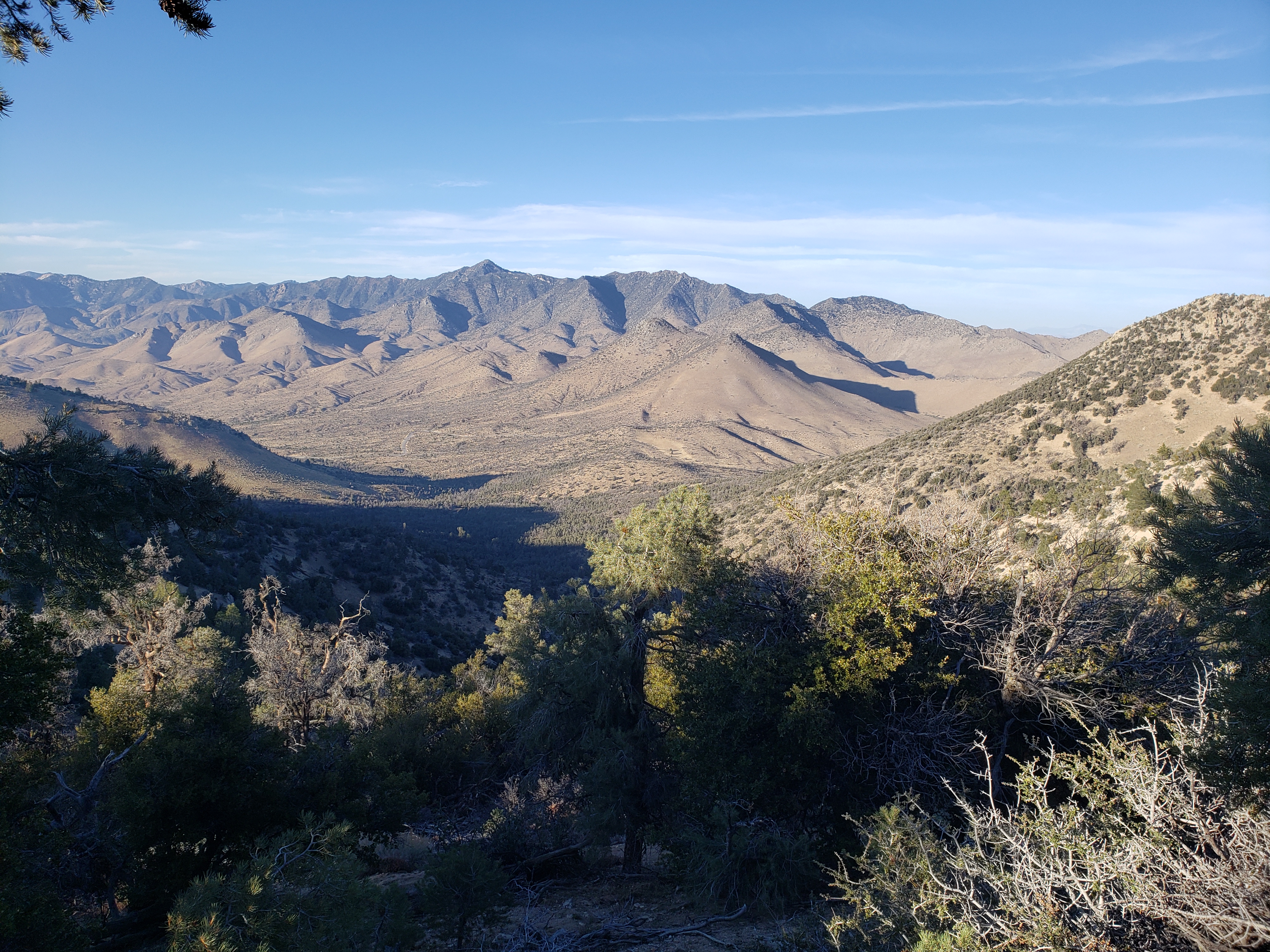
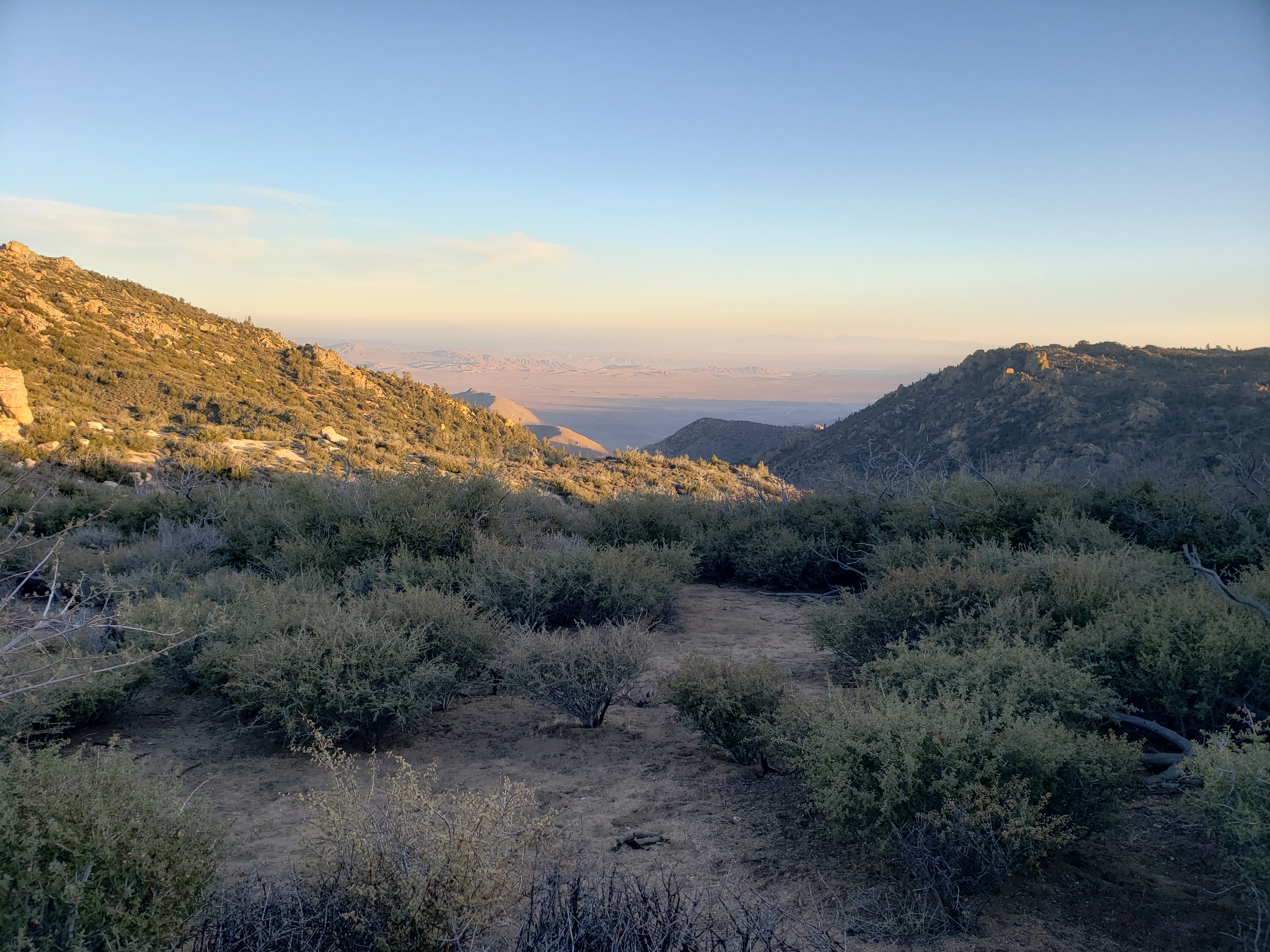
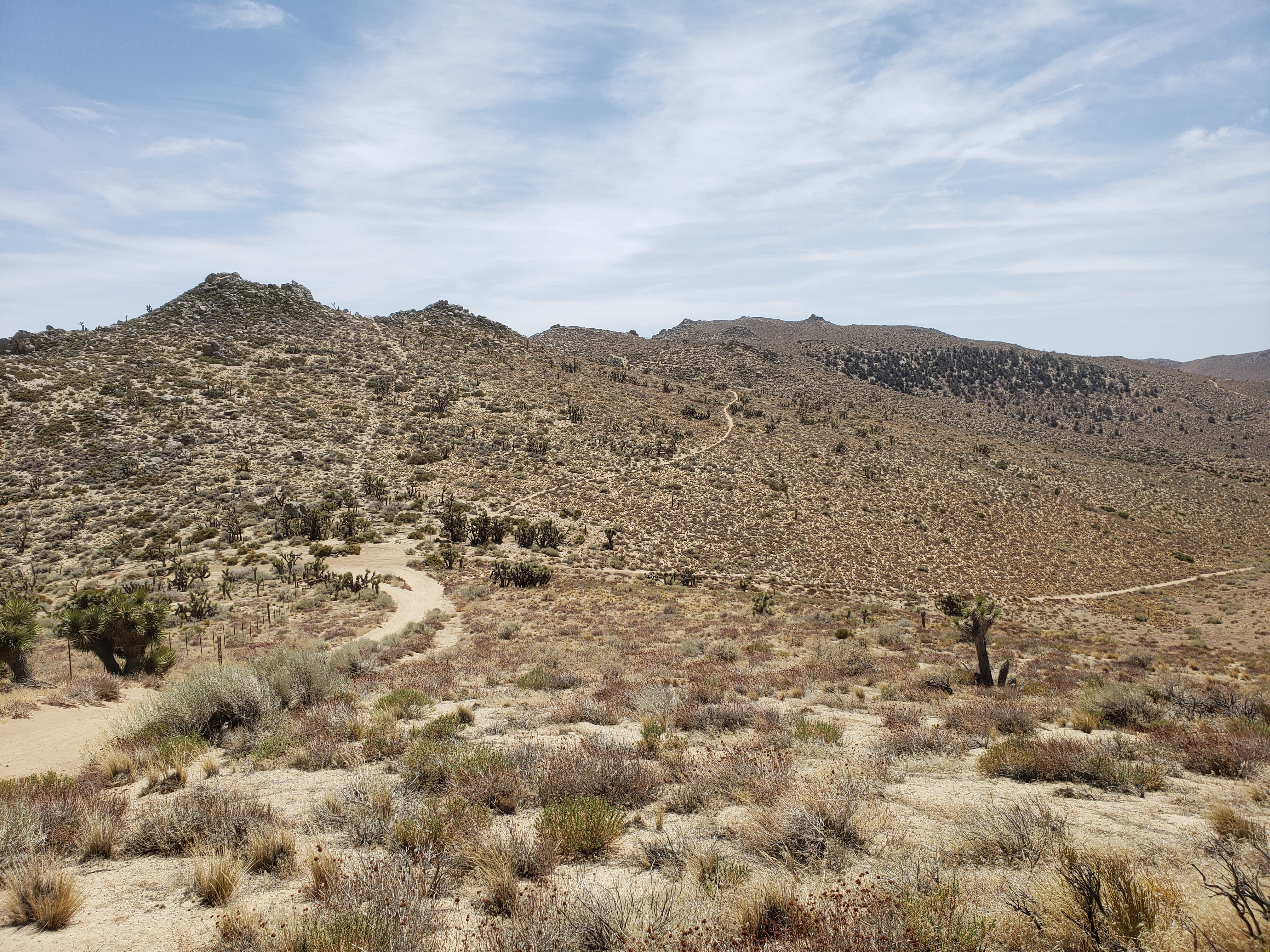
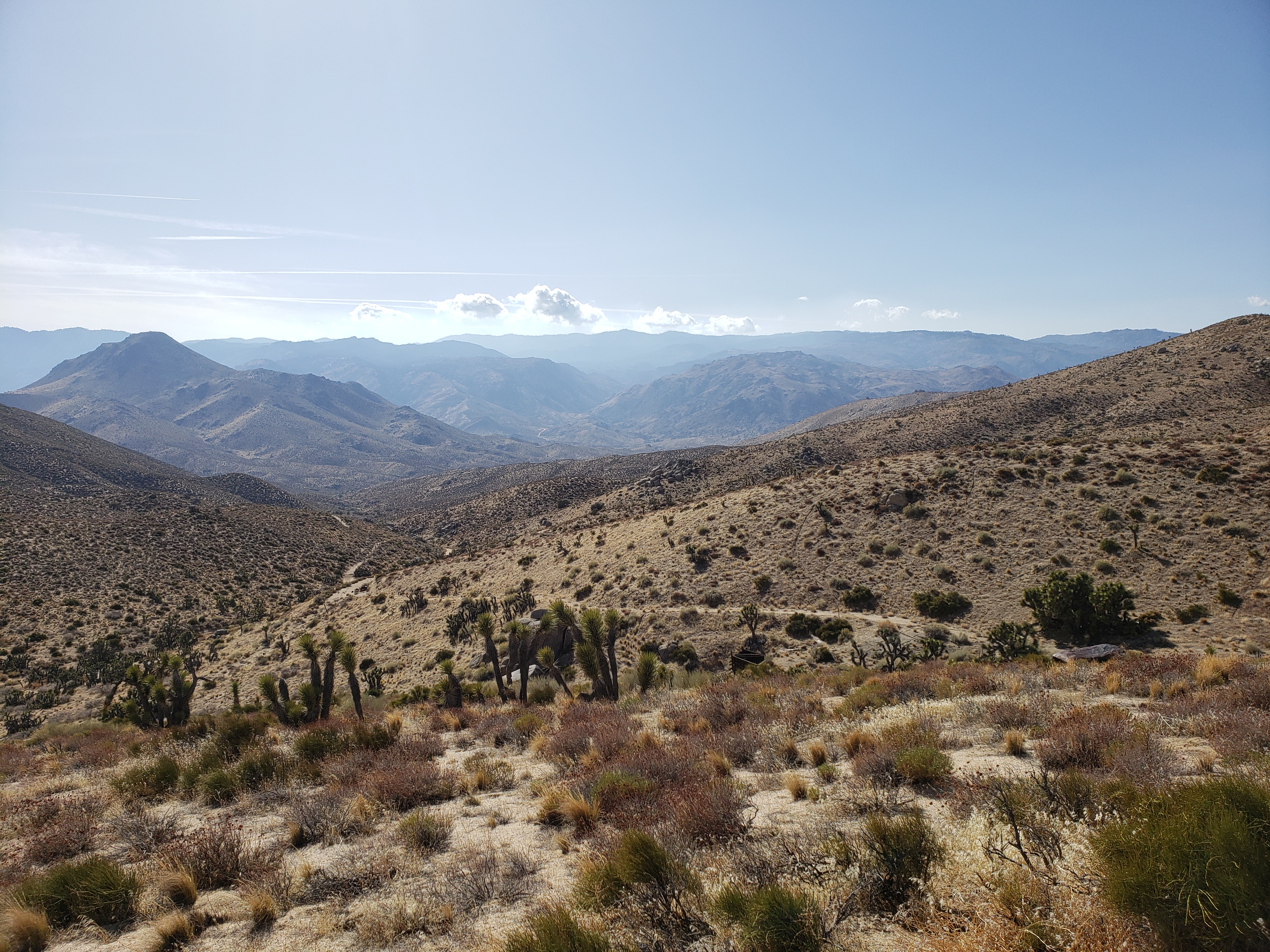
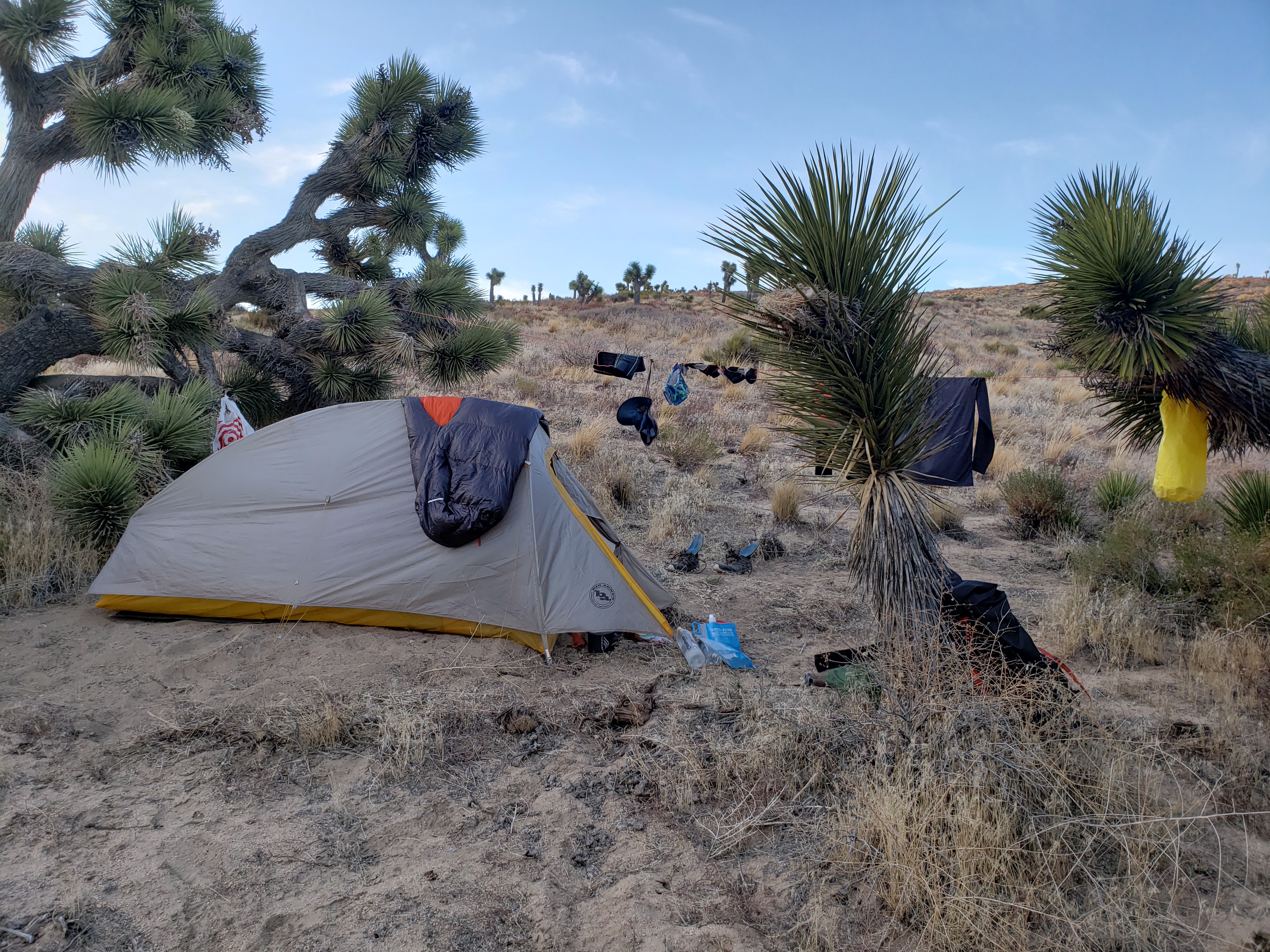
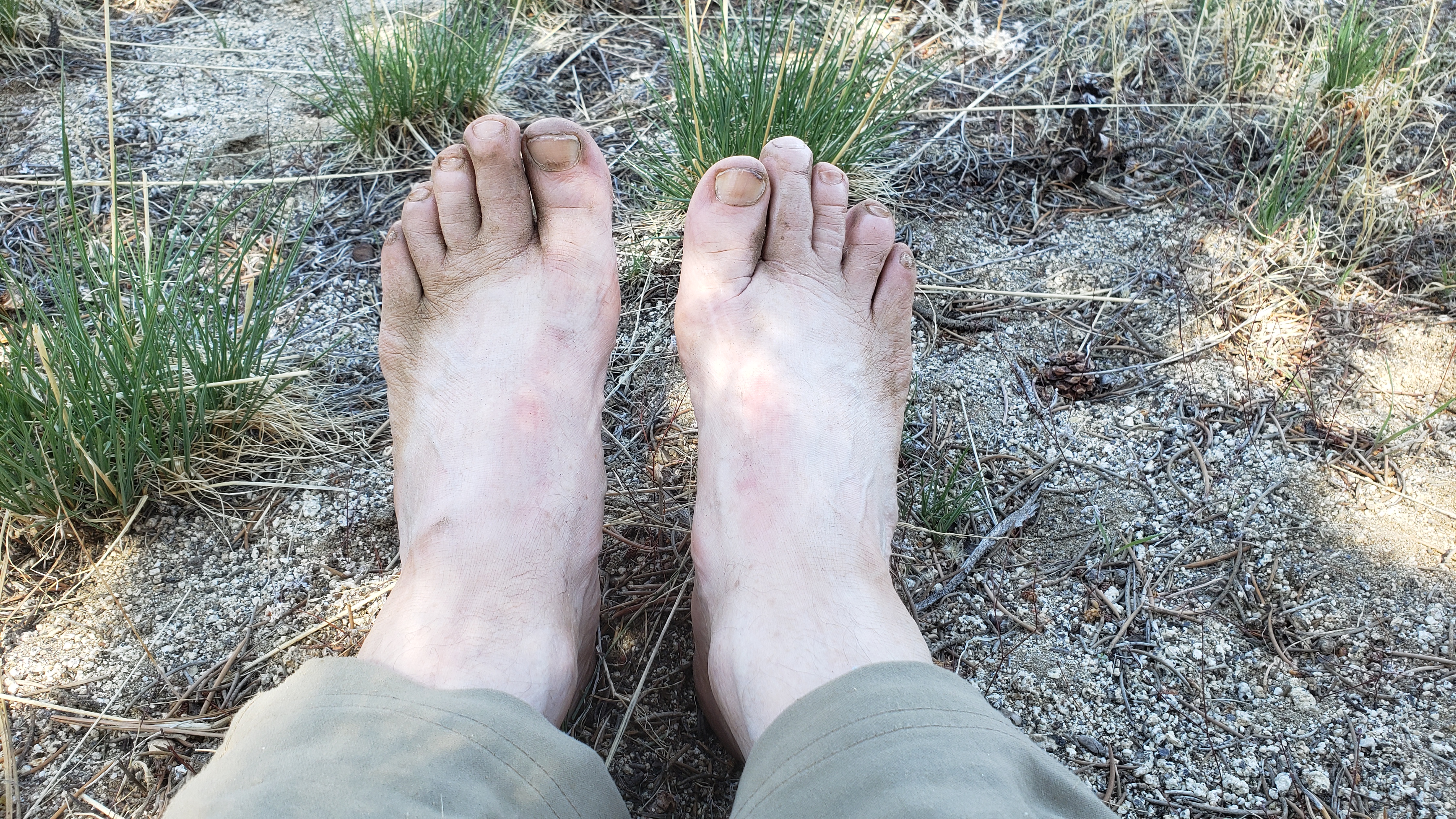
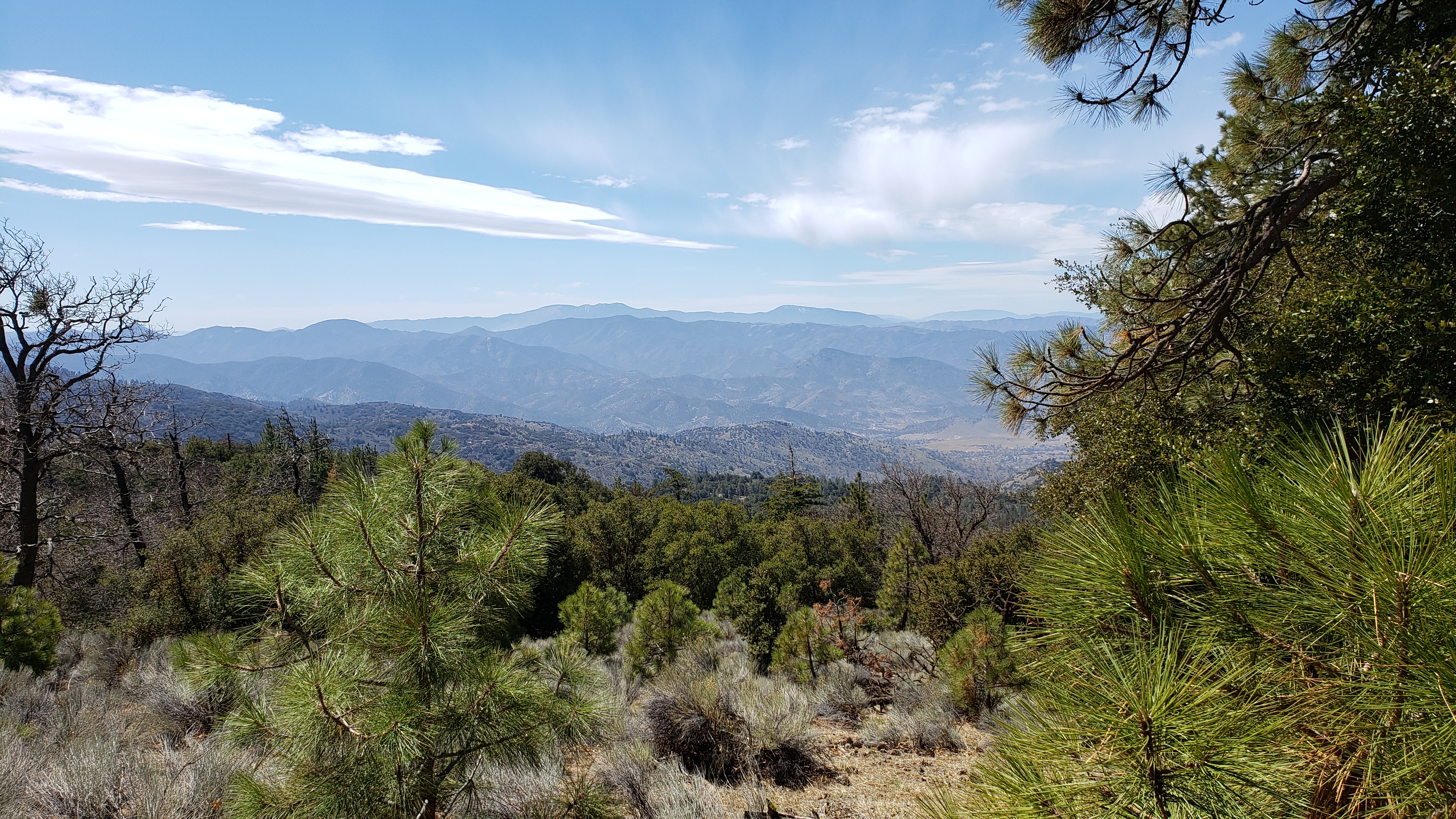
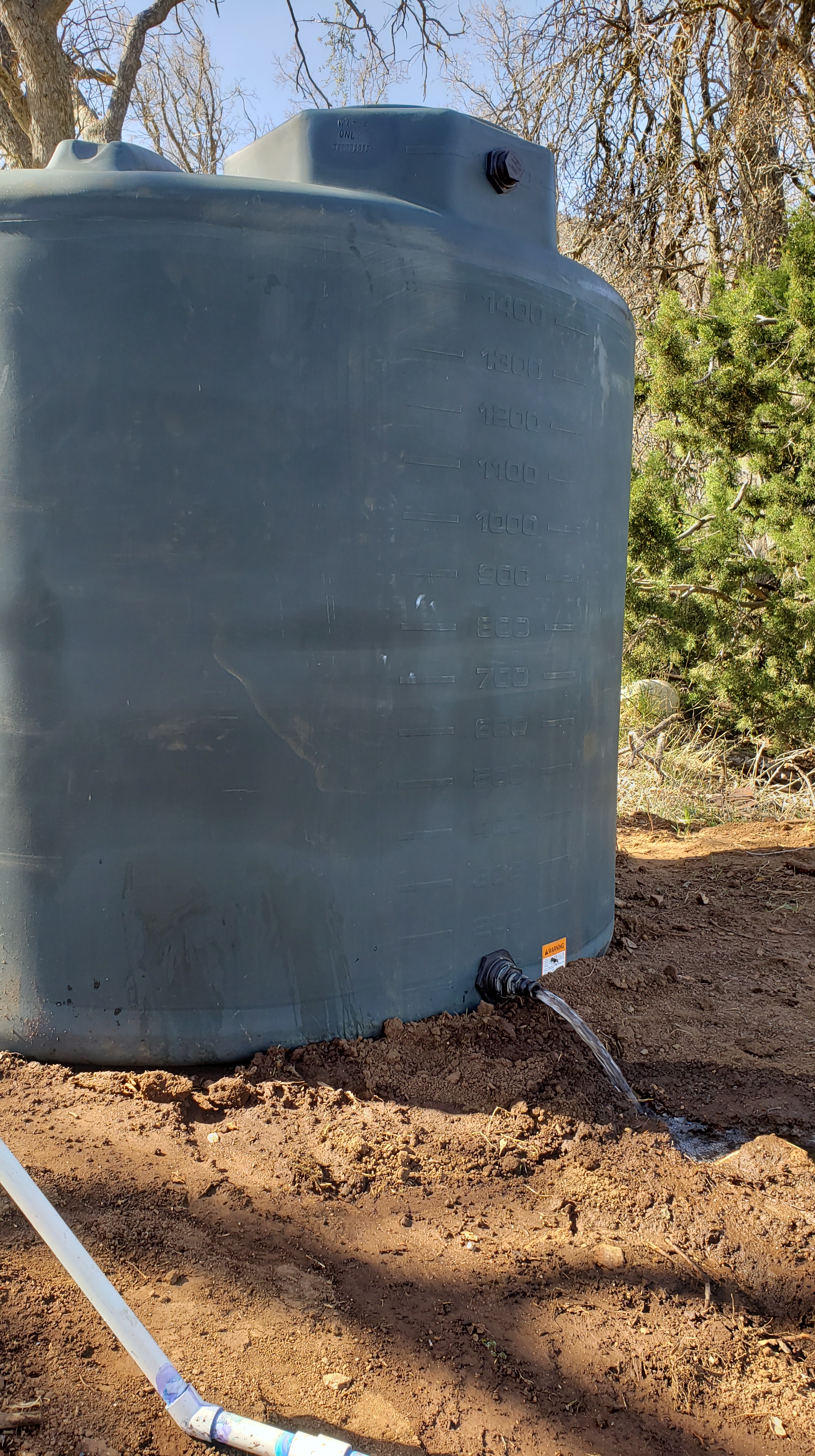
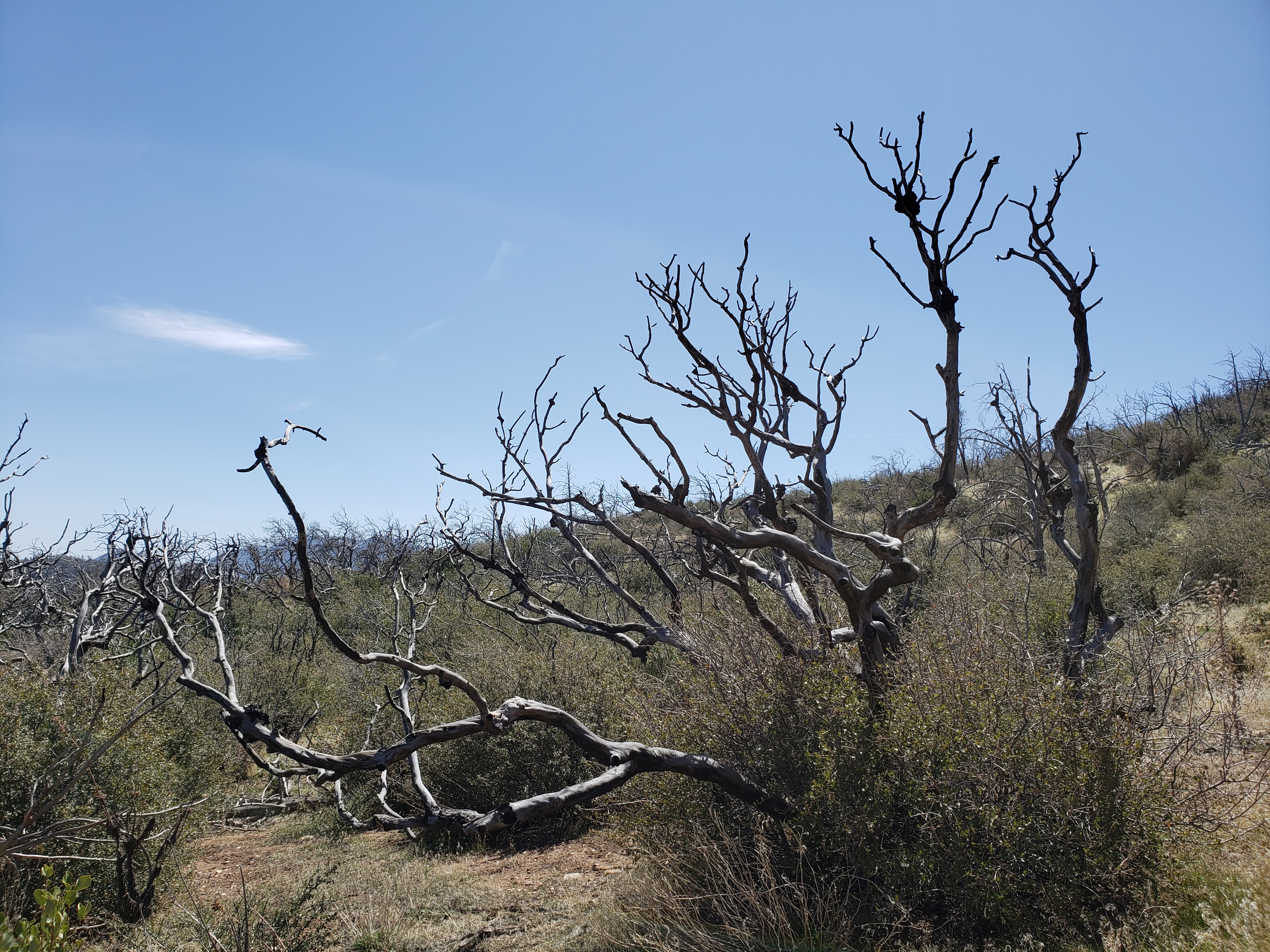
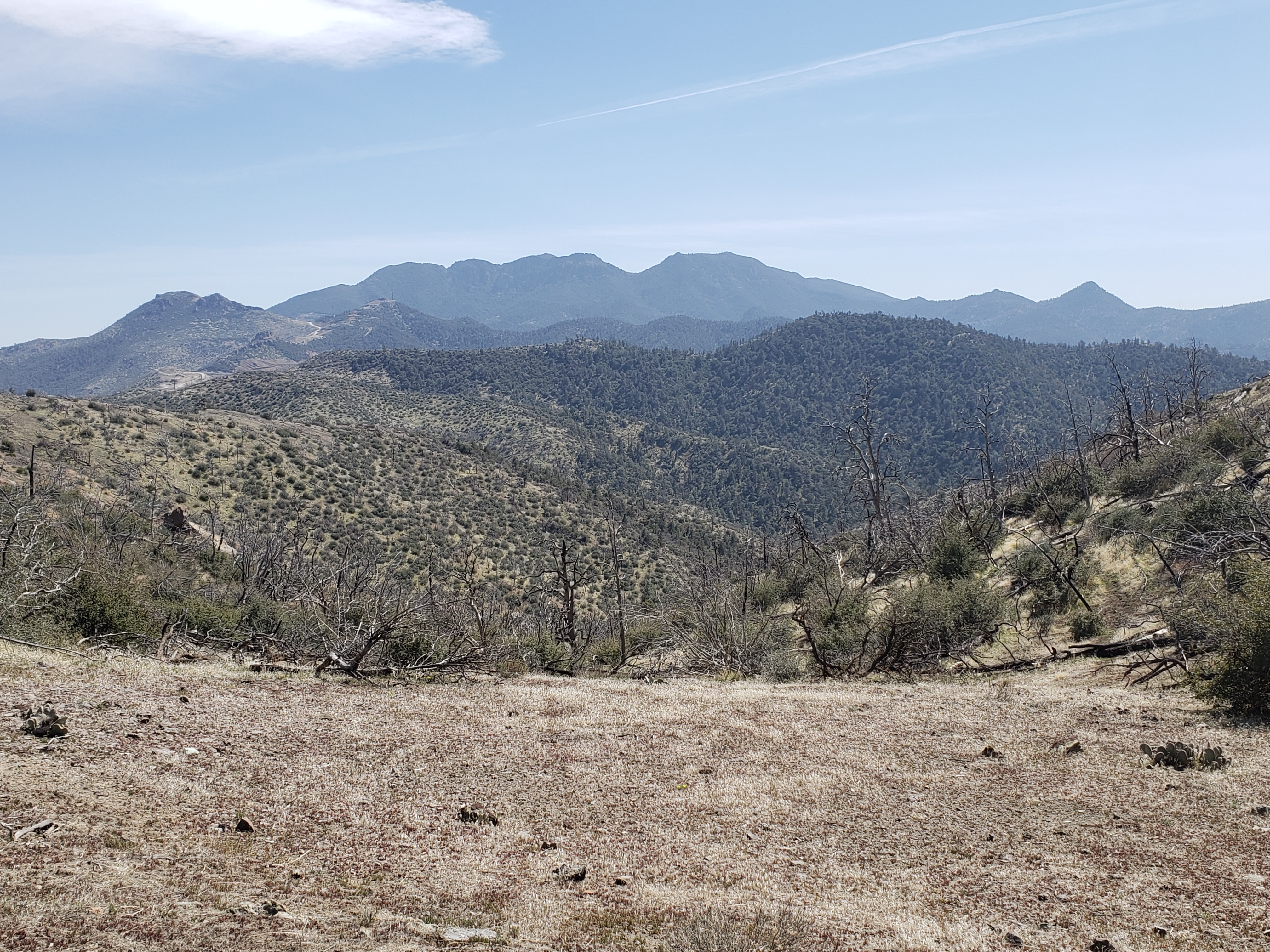
Me at Walker PassJoshua trees along the trailMy Joshua tree campsite, end of Day 3Kelso Valley RoadDirty feetStill some snow in placesThe interplay of light and shadowI hiked off the trail to the “sheep ranch” for water. No sheep, but one large bull.The water tank at the “sheep ranch”Dead trees. I’ve passed through many fire zones.Golden Oak Spring, end of Day 6Yes, I do on this section of trail, at least tonightMohave viewFeeling like 100 Grand
Let’s be clear. Gravity is a b*tch, particularly for us older, more mature hikers. Curse you, Sir Isaac Newton.
I sometimes think that my hiking name should be “Sir Huff ‘n Puff” because the slightest incline sets me huffing and puffing as I climb.
When I was a boy hiking with my dad, I could never understand why he got winded so easily. Now, I do understand. On every climb, we’d have to stop numerous times so that he could take a “blow,” as he called it.
Today, when I hike with my son, our understanding is that he’ll power to the top of a climb by himself and wait for me there to catch up. He keeps reading material easily at hand to fill that waiting time.
For those of you who read the headline and thought of marijuana, shame.
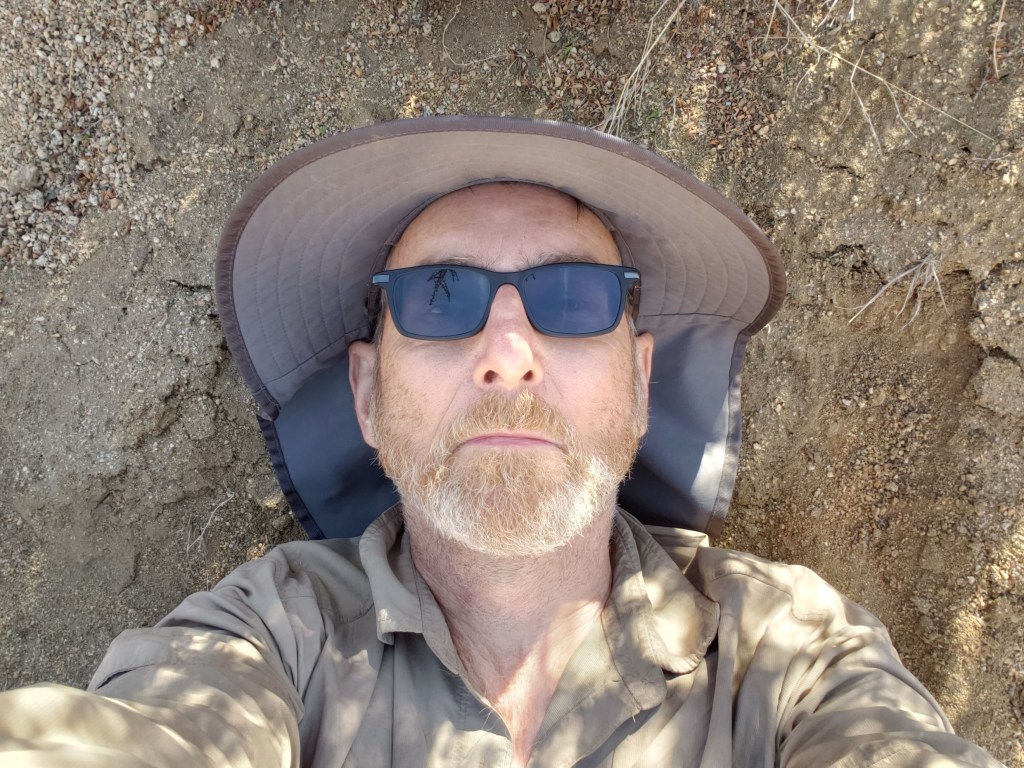
After a climb, recuperating on my back in the shade
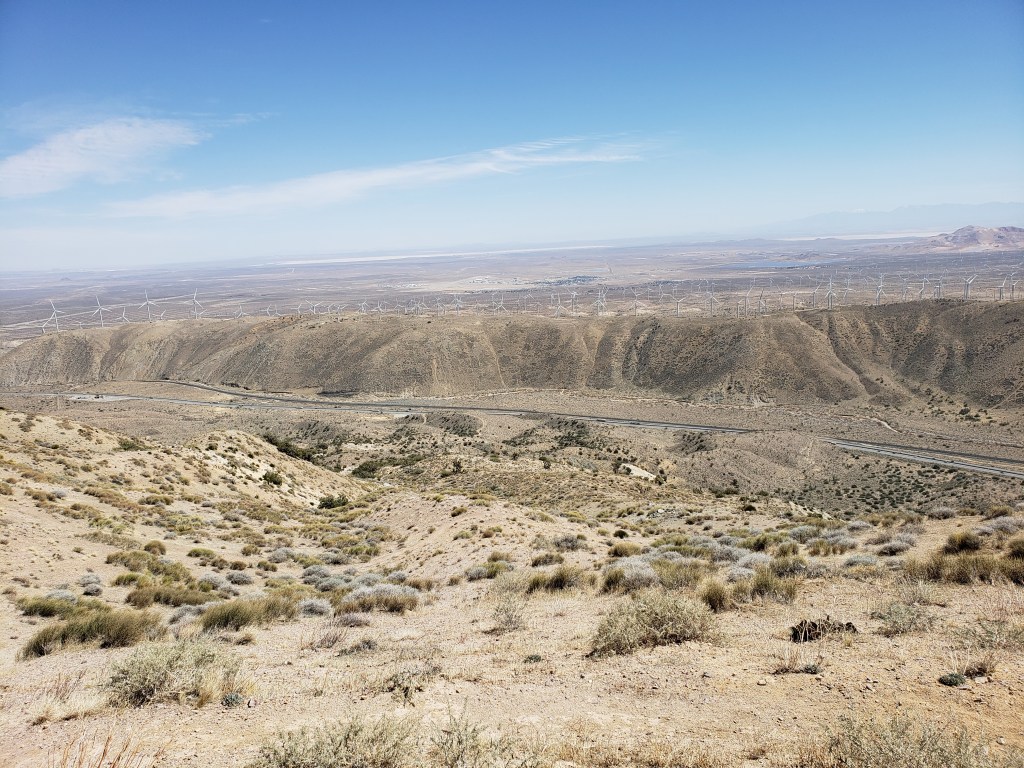
It’s the wind, but also the sound of electricity. At the end you’ll hear the sound of a wind turbine rotating.
The portion of the Sierra from Walker Pass to Tehachapi and south divides the Central Valley and the Mohave Desert. Even though the Valley can be hot, the Mohave is hotter and it pulls air from the Valley to the Desert throughout the year, creating strong winds along the ridges. When those winds are funneled through passes, as at Tehachapi, they become stronger still.
Wind farm development in the area began in the 1980’s and is on-going. Today, there are over 5000 wind turbines near Tehachapi, producing over 3.5 million megawatt hours of electricity per year.
On the third day of my hike, the winds were so strong that I was buffeted about whenever I was on the west side of the ridge. At times, I was staggering like a drunkard, trying to fight the wind to move forward.
On the sixth day, I passed through a construction zone where new wind turbines are being installed. You’ll see a map of that area below and a photo of some of the earthmoving equipment being used to build access roads and turbine platforms.
I’m taking a “zero day” today in Tehachapi. A “zero day” is when a hiker takes the entire day off and doesn’t hike. “Zero” is used because the hiker hikes zero miles that day.
A related term is “nearo.” That’s when a hiker hikes only part of the day. “Nearo” is used because the hiker hikes nearly zero miles.
I hiked 16 miles yesterday to reach Tehachapi. It was my longest trail day to date.
The PCT crosses California Rt. 58 about 10 miles outside of town. Marta drove down from Hanford and picked me up at the trailhead. Then we had dinner together and spent the night at a local motel. I can tell you I enjoyed every bite of my 12-ounce steak dinner and every drop of my ice cold 20-ounce draft beer.
This morning, after breakfast, Marta drove me to Wally World so that I could “resupply.” Thats the term used when a hiker heads into town to buy groceries and other necessary supplies.
I also stopped at Big 5 to buy a new elastic knee support. I wear these on both knees as a precautionary measure. One of my old ones had stretched over time and kept slipping down my leg as I walked.
After these errands were done, we had lunch together, and then Marta drove home to Hanford. That left me the rest of the day to write new blog posts, download maps for the next trail section, and take care of other necessary business before heading back out on the trail first thing tomorrow morning.
One aspect of a zero or nearo is that your body, particularly my 64-year-old body, has the opportunity to tell you how tired it is. I’ve been walking around all day in a haze. Some people call this “hiker hangover.” I’ve also been experiencing “hiker hobble.” That’s when your sore feet cause you to hobble around as if you are trying to get back your “land legs” after months at sea.
If you don’t know this already, Tehachapi is wind turbine central. It’s almost always windy here because the hot Mohave Desert to the east pulls the air from the cooler Central Valley to the west.
When most people think of the Sierra, they think of the beauty of Yosemite — waterfalls, forests, granite. That’s not the case this far south. The mountains are dry. Lots of sand, sage brush, and an occasional Joshua tree.
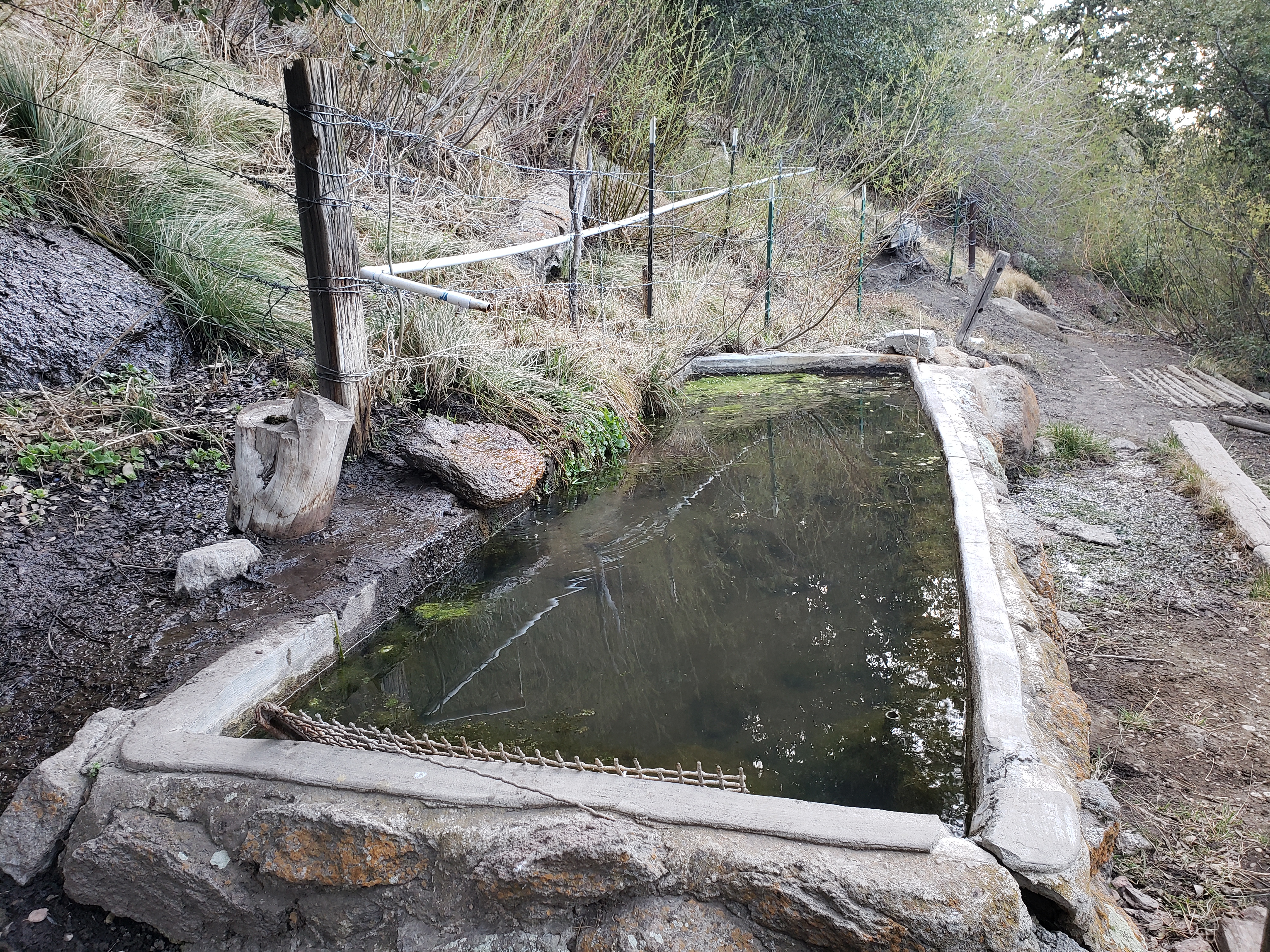
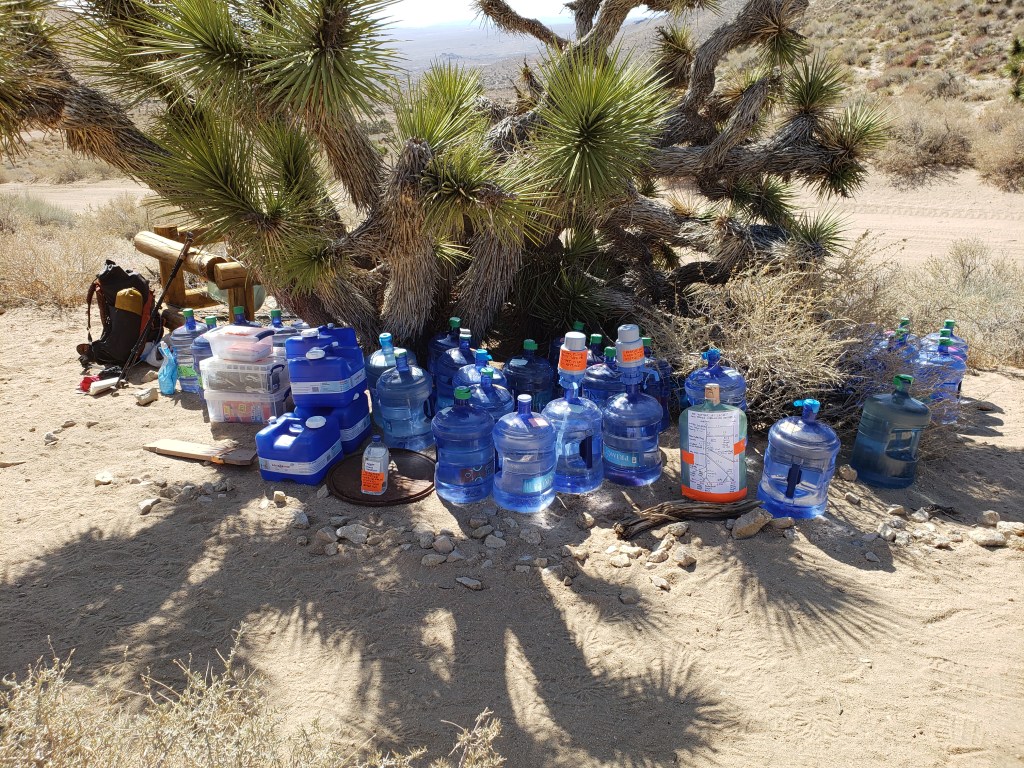
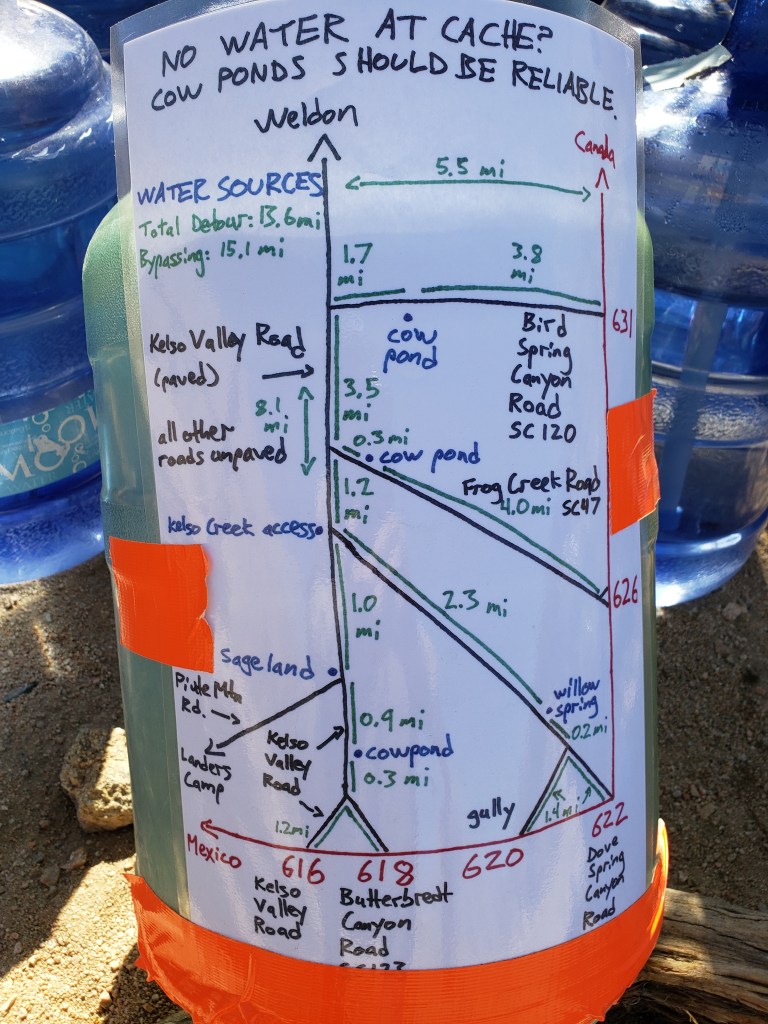
It’s so dry that water can be a problem. Fortunately there are “trail angels” who leave water caches like this one:
Otherwise, I’d have to get off the trail and walk several miles to reliable water infrastructure for grazing cows, as the map below shows. (Given the dryness of the countryside, grazing can only take place in winter.)
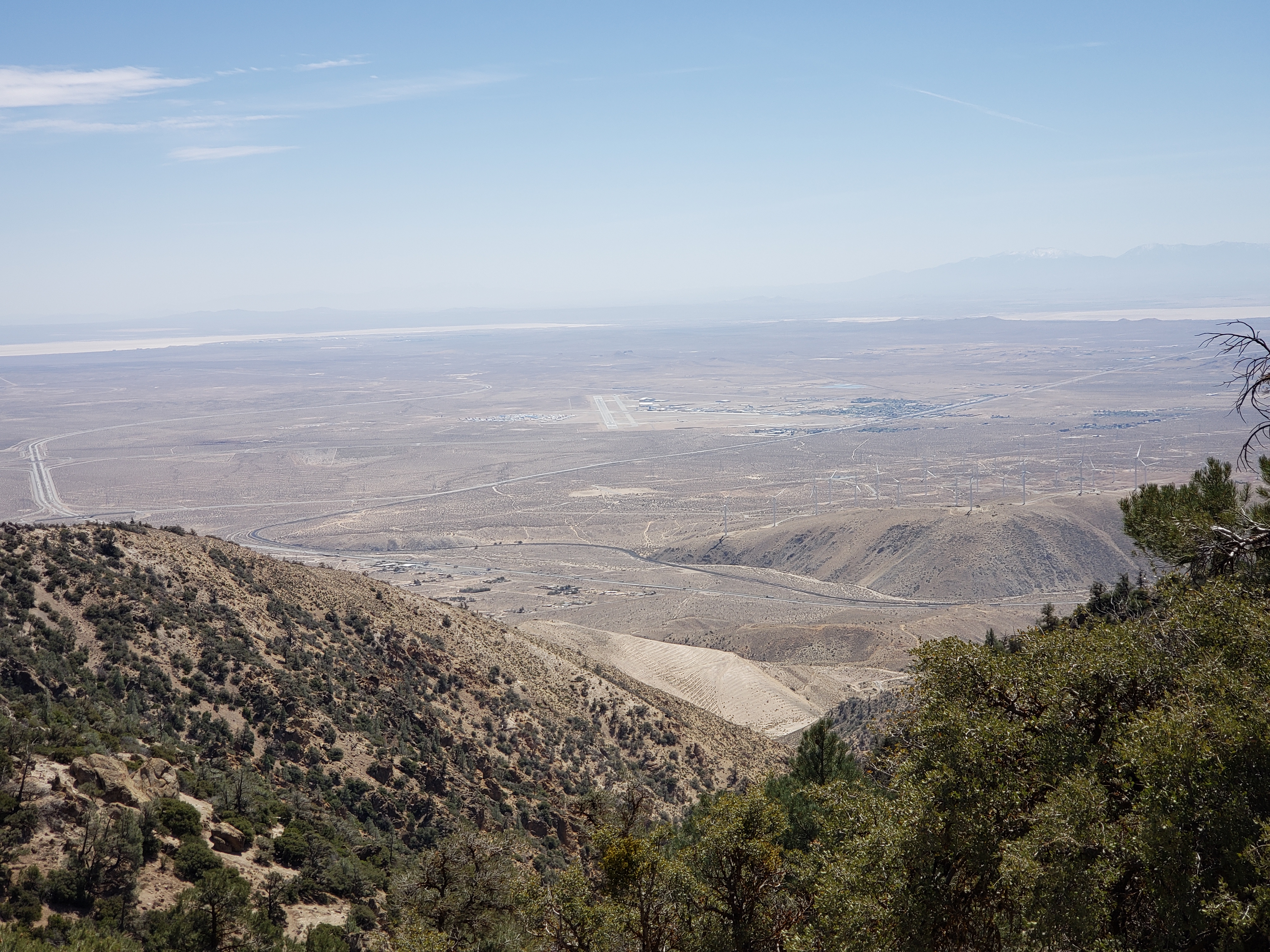
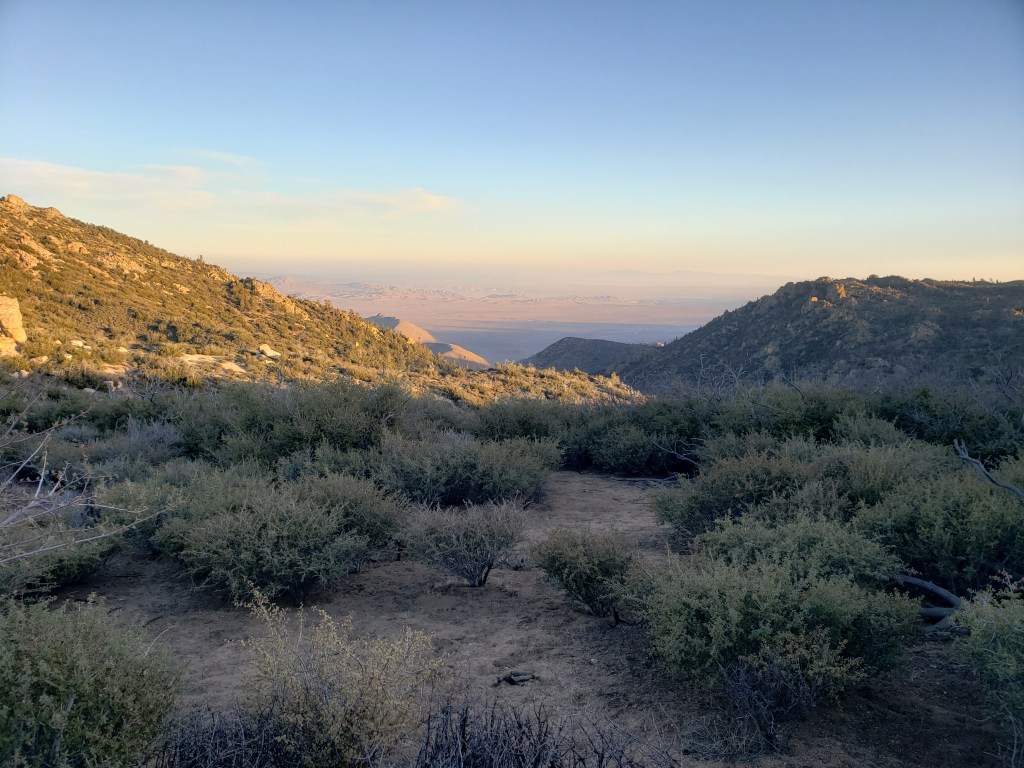
I’m posting this from the trail. I’m on a ridge facing the Mohave and I happen to have cell service.
When I chose my starting date, I didn’t realize the date read “4/3/21” as in 4, 3, 2, 1, go! I hope that is auspicious.
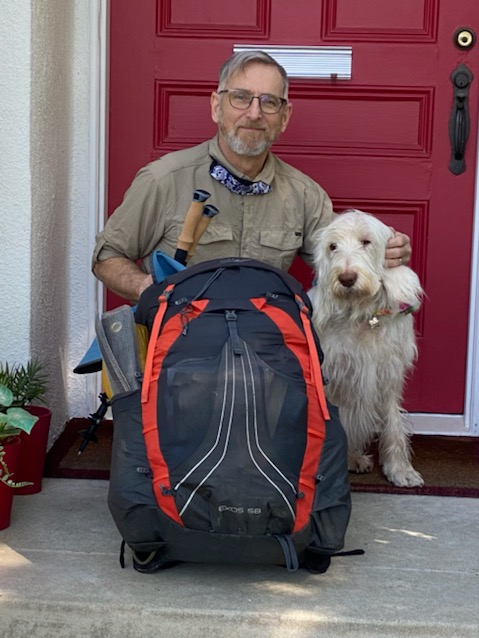
Above, you’ll find a picture Marta took of me with my gear and with Mochi, our dog, in front of our house in Hanford before we got in the car to drive to the trailhead at Walker Pass, east of Bakersfield. (No, Mochi isn’t hiking with me.)
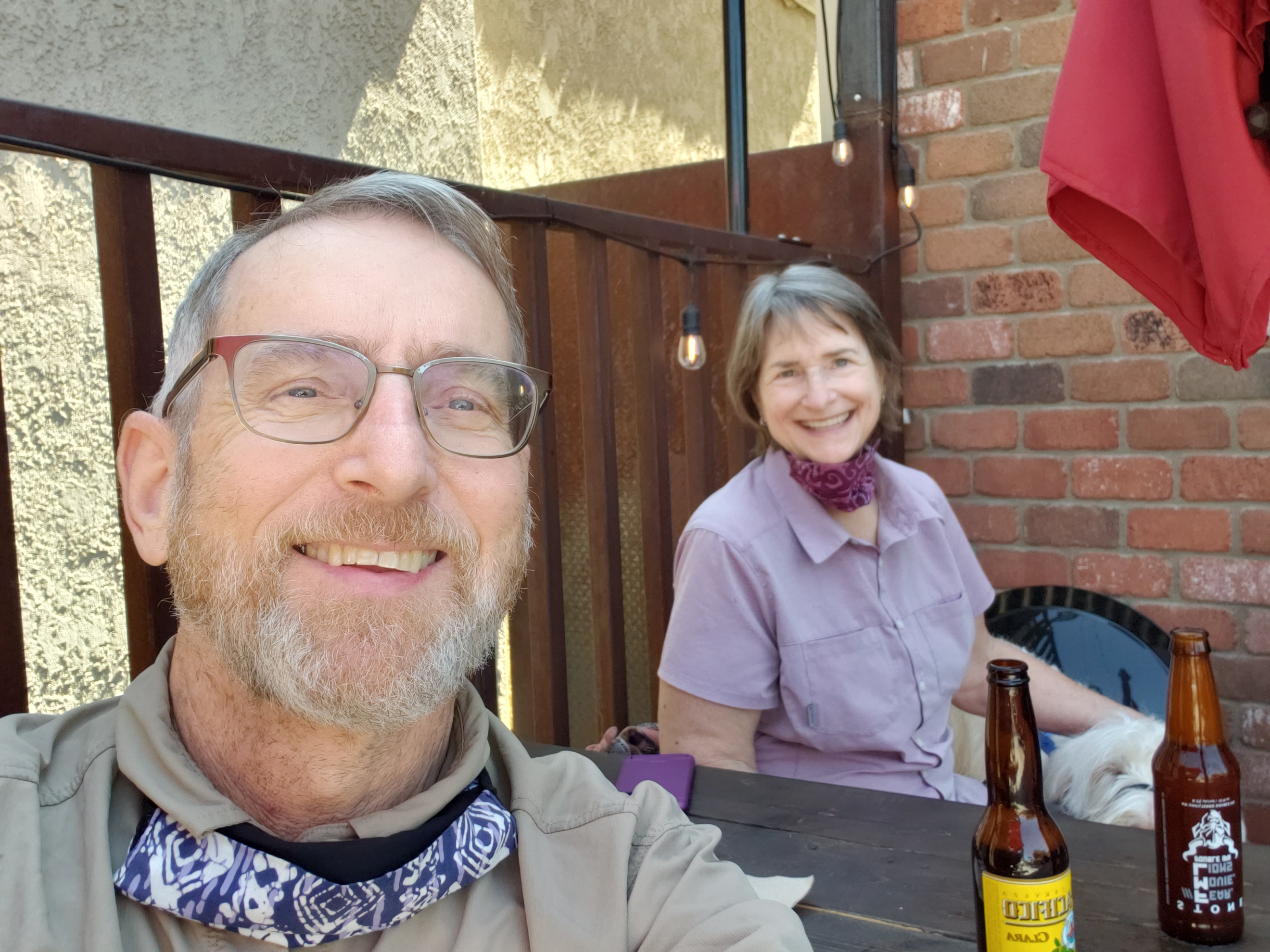
The other photo is of Marta and me, having lunch in Bakersfield at Prime Time BBQ. This will be my last “real” meal for at least a week. (Hiker meals don’t count as real.)
I had a heck of a time getting ready for my hike. I didn’t schedule enough time between my last day at work and my first day on the trail. That’s the reason for only two posts before this one. I’ll try to make it up to you, my loyal readers, as I go. But don’t expect any posts for a week due to lack of cell service.
I also had a heck of a time getting out the door this morning. Because of that and the distance between water on the trail in Southern California, I’ll almost certainly camp at the trailhead this afternoon and get started for real tomorrow morning. There’s a small campground with water at the trailhead.
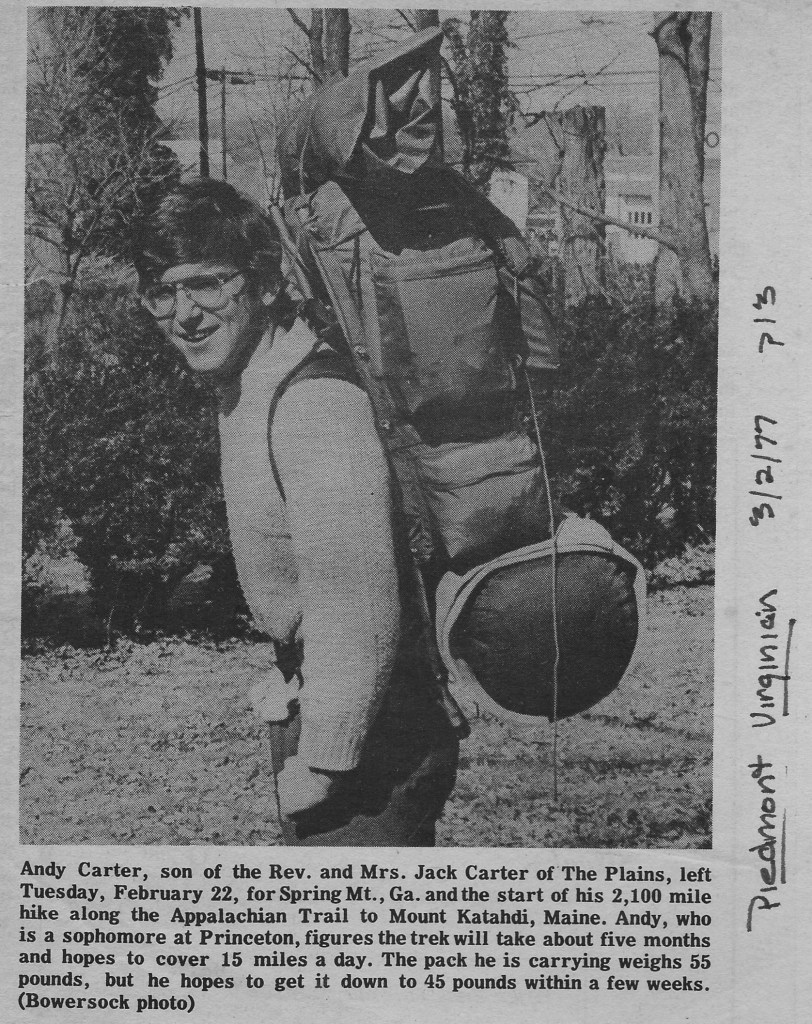
When I was 20 years old, I hiked the 2,100 mile Appalachian Trail (AT) from Georgia to Maine. I had Advanced Placement in college, so I was able to take the spring semester off my sophomore year and still graduate with my class. Here’s a photo of me which ran in the local paper as I was beginning my hike.
There are place-name typos in the article. I started at Springer Mountain, Georgia on February 24, 1977 and reached Mt. Katahdin, Maine on July 12, 1977.
I decided to hike the Appalachian Trail because I needed a break from college. Academically, I was over my head at Princeton. I realized my freshman year that if I didn’t take some time off in the middle, I wasn’t likely to graduate. Hiking the AT seemed like the perfect thing to do. It also proved less costly than attending college that one semester.
My father was a hiker, so I started hiking with him when I was a boy. We’d go on at least one hiking trip each year, and usually two or three. I had probably hiked 300 miles with him before I began my AT thru-hike.
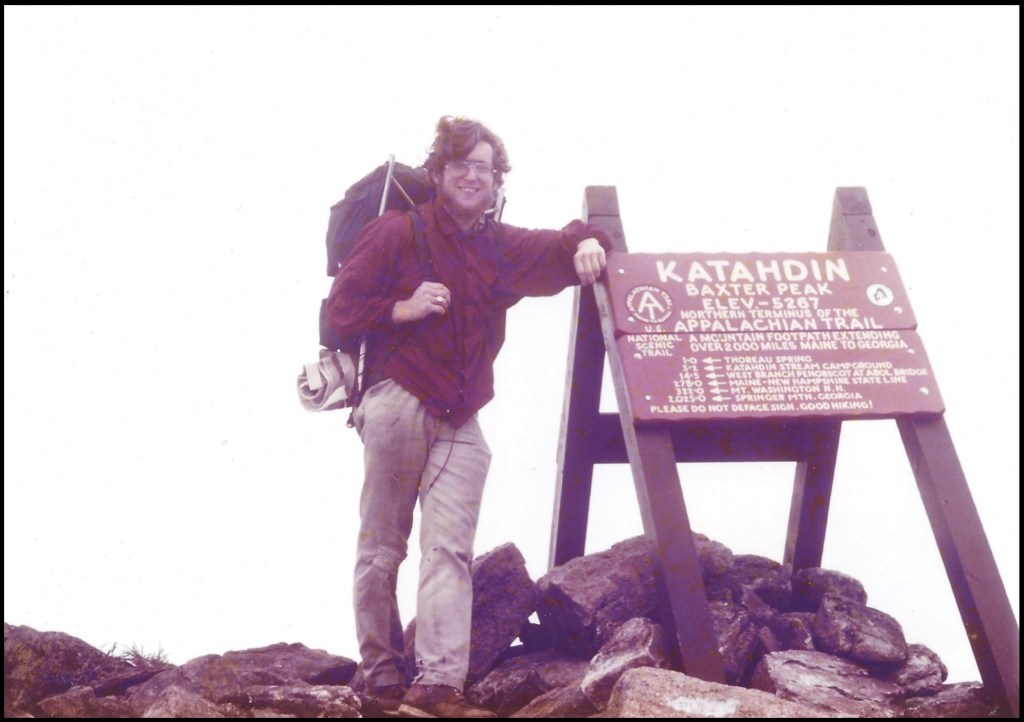
Here’s a picture of me at the end.
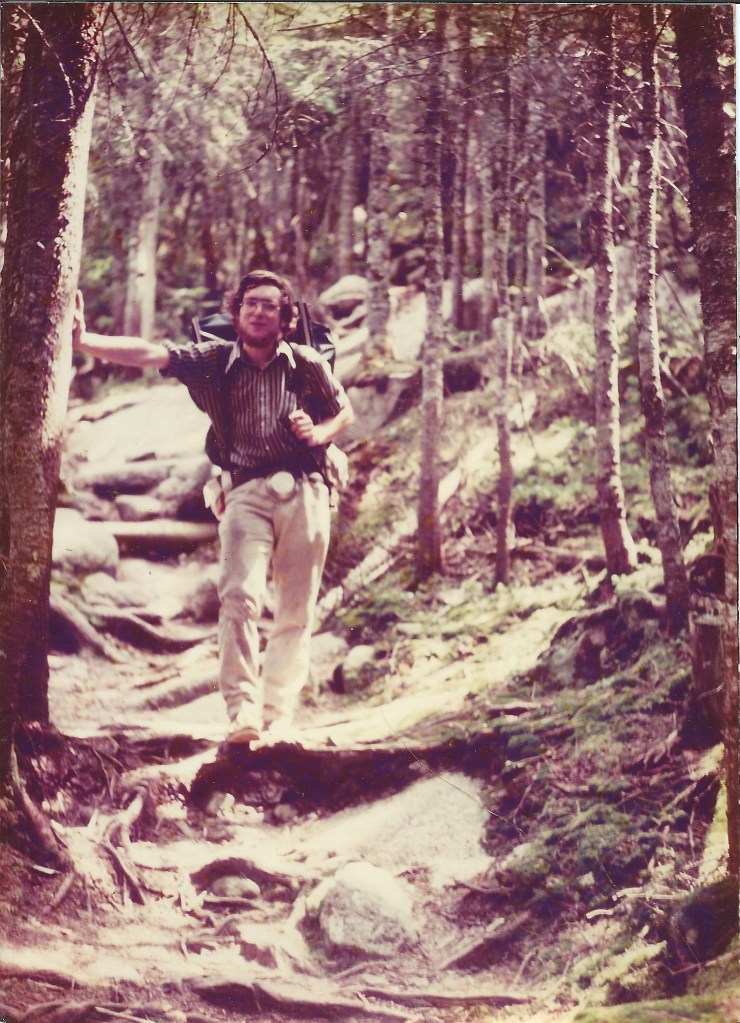
I definitely look a little dirty. Those pants have been through hell, and I could use a hair-cut and a shave. It’s hard to see, but I’m sporting an Amish chin beard. Here’s another photo from that final day.
I absolutely adored my hike. I found that hiking agreed with me, which is not the case for all people. When I’m hiking, I get into a Zen-like meditative state. My brain goes where it wants to go. I have found that there is nothing so effective at clearing my brain and calming my soul than hiking. There is also something cleansing about the physical exertion. When I was hiking the AT, I came to believe that man was meant to get up with the sun, go to bed with the sun, and work hard the entire day in between.
The hike changed me, if just for a little while. I tend to be tightly wound. All those who have heard me talk to myself and curse at my computer while I work will attest to that. My thru-hike made me profoundly mellow. In the middle of the hike, I stopped off at college to see my friends. Their constant refrain after spending a little while with me was, “Who the heck are you?” That’s how different I was acting. Unfortunately, that mellowness only lasted a week or two after I got home.
Here’s a water color a friend of mine did of me while I was still in that mellow state just a two days after I finished. She called it, “Andrew in the Garden in his Brain.”
The desire to hike the Pacific Crest Trail has been with me ever since my AT thru-hike, but life — marriage, kids, a career — got in the way. That desire was sleeping until just a few years ago. What woke it up was my son William’s thru-hike of the Appalachian Trail in 2017/18. Just as I started hiking with my father, my son started hiking with me. Sometimes life comes full circle. William was between his first and second job after college, living in Alabama. Hiking the AT seemed like the perfect thing for him to do as well.
My son hiked the AT from Maine to Georgia instead of from Georgia to Maine. He started in the middle of July, 2017 and finished in the middle of January, 2018. It was very cold at the end, but he persevered.. Here’s a picture of him at the start in Maine and one of him at the end in Georgia. The picture he had taken at Mt. Katahdin was designed to mimic the one I’d had taken there 40 years before.
So, for the past four years, I’ve been thinking about hiking the PCT. Now, I’m about to start.














 Carter Hikes