I just completed a multi-year thru hike (MYTH) of the Pacific Crest Trail (PCT). It took three years. I hiked 1840 miles in 2021, 733 miles in 2022, and 122 miles in 2023. The only reason I had to hike in 2023 was a wildfire closure at the north end of the PCT in 2022. During the past two years, I've also thru hiked other, shorter US trails. I hiked the Benton MacKaye Trail (GA, NC, TN) and the Tuscarora Trail (VA, WV, MD, PA) in 2022 plus the Ozark Highlands Trail (AR) in 2023. I hope to hike the Long Trail (VT) next year and the Colorado Trail at some point in the future. Please note, all content on this site is copyright.
It’s been over a year since I talked about finishing the first draft of my book, “Two Trails.” Perhaps you’re wondering, “Is it completed? Can I get a copy?”
No, it’s not completed. It needs major editing, and life got in the way. During the past 15 months, my wife and I moved … twice. In addition to the physical moves we completed ourselves (go U-Haul), we took furniture and other items across country to my stepdaughters in South Carolina and Minnesota. We also completed extensive repair work on the house we had lived in (my wife for 30 years, me for 10) to prepare it for sale, extensive work on the house we had just bought, and extensive work on the rental property my wife owned which we lived in temporarily to prepare it for sale.
Finally, finally, I’m about to get back to the book. As I wrote above, it needs major editing. This sentiment based on my own thinking and that of everyone (mostly family) who read the first draft.
In its current form, the book is schizophrenic, alternating between travelogue and fact-based commentary on the Appalachian Trail, the Pacific Crest Trail, and hiking then vs. now. I’m searching for an outline which makes sense. Also, a single editorial voice to use. The fact-based parts of the current draft use a business-like expository writing style. The travelogue parts, a personal narrative style. Like I said, schizophrenic.
So, time to get back at it. I’ll keep you posted.
In case you’re wondering if I’m still out there hiking. Yes, I am. In addition to hiking the 2650-mile Pacific Crest Trail since I retired in April 2001, I’ve hiked the 290-mile Benton MacKaye Trail (Georgia, North Carolina, and Tennesse), the 250-mile Tuscarora Trail (Virginia, West Virginia, Maryland, and Pennsylvania), the 270-mile Ozark Highlands Trail (Arkansas), and the 225-mile Ouachita Trail (also Arkansas). And in 10 days, I plan to start hiking the 270-mile Long Trail (Vermont).
I did it. I finished my book. 73,000 words. 110 pages, single space on 8.5 x 11 inch paper with 3/4″ margins.
I’m in the copy edit phase now. Once that’s done, I’ll self-publish and provide copies to friends and family who are interested.
I’ll make an effort to get it actually published, but I’m not holding my breath. Hiking books are a dime a dozen.
Read the text below to see what the book is about.
I can’t tell you how wonderful it feels to accomplish something I’ve wanted to accomplish all my life — write a book. It feels like what it felt like to complete my Appalachian Trail thru-hike in 1977 when I was 20 years old.
“Two Trails” Introduction
In 1977, when I was 20 years old, I thru-hiked the Appalachian Trail from Georgia to Maine. In 2021 to 2023, when I was in my mid-60’s, I section hiked the Pacific Crest Trail from Mexico to Canada. Two trails – 45 years apart. Two ages in life – one young, one old. Two eras – the 1970’s and the 2020’s.
In this book, I will compare the differences between the Appalachian Trail and the Pacific Crest Trail. The differences in landscape, in ruggedness and remoteness, in trail construction and trail amenities, in flora, fauna, and climate. I’ll discuss what it’s like to hike one trail as a young man and the other as an aging adult, how a thru-hike is different than a section hike, how I got started hiking, and why I hiked each trail when I did. I’ll describe the changes in gear and technology I’ve seen over the 45 years between my two hikes, what I carried each time in my pack, and what food I ate. I’ll discuss the places I saw and the people I met, the thoughts and feelings I had while hiking the two trails, what I learned from my two hikes, and how hiking each trail changed me.
You’ll find at the bottom the final daily itinerary for my multi-year thru hike (MYTH) of the PCT. When I look at it, even I get confused. So many stops and starts. So many times I switched directions.
What’s more the 2021 portion of my hike, even the 2022 portion, seem like ancient history. This hike took too long.
I can tell you there is a significant difference between a MYTH and a single-year thru hike. The single year hike is more rewarding. It impacts you more and has the potential to change you more, even if it’s just during the time you’re hiking. When I thru hiked the Appalachian Trail in 1977 and stopped halfway to visit friends at the college I was attending, many of them exclaimed, “Who the hell are you!” The calm Andrew of the woods was not the crazed Andrew they were used to at school.
There’s also something intrinsically rewarding to starting at one place, hiking in one direction, and months later, ending at another place — with few gaps along the way.
On a MYTH, particularly one with so many flip flops, so many stops and starts, so many gaps, you never truly get into the hike. You’re always torn between two worlds — the natural world of the woods vs. the “civilized” world of home, family, and friends. You’re torn between two different types of living — the slow pace of hiking, the get-up-with-the-sun go-to-bed-with-the-sun rhythm of hiking, and the silence of the woods vs. everything that assaults your senses in the go-go-go modern world.
In this first week back at home after the completion of my hike, I found shopping for groceries to be over-stimulating. I can only imagine how worse it would have been if I lived in a big city and had to face crowds of people, freeway speeds, and commuter traffic. There’s a big difference between the 2 to 3 mile-per-hour pace of hiking and the 60 to 80 mile-per-hour speed of driving plus seeing just a few people a day vs. thousands.
Even dealing with my wife was a challenge at first. She’s a wonderful person, I love her deeply, but I’d been completely alone. Having someone in “my personal space,” even someone I love, was a challenge.
My full itinerary appears at the bottom. I’ll summarize it here, so it makes more sense.
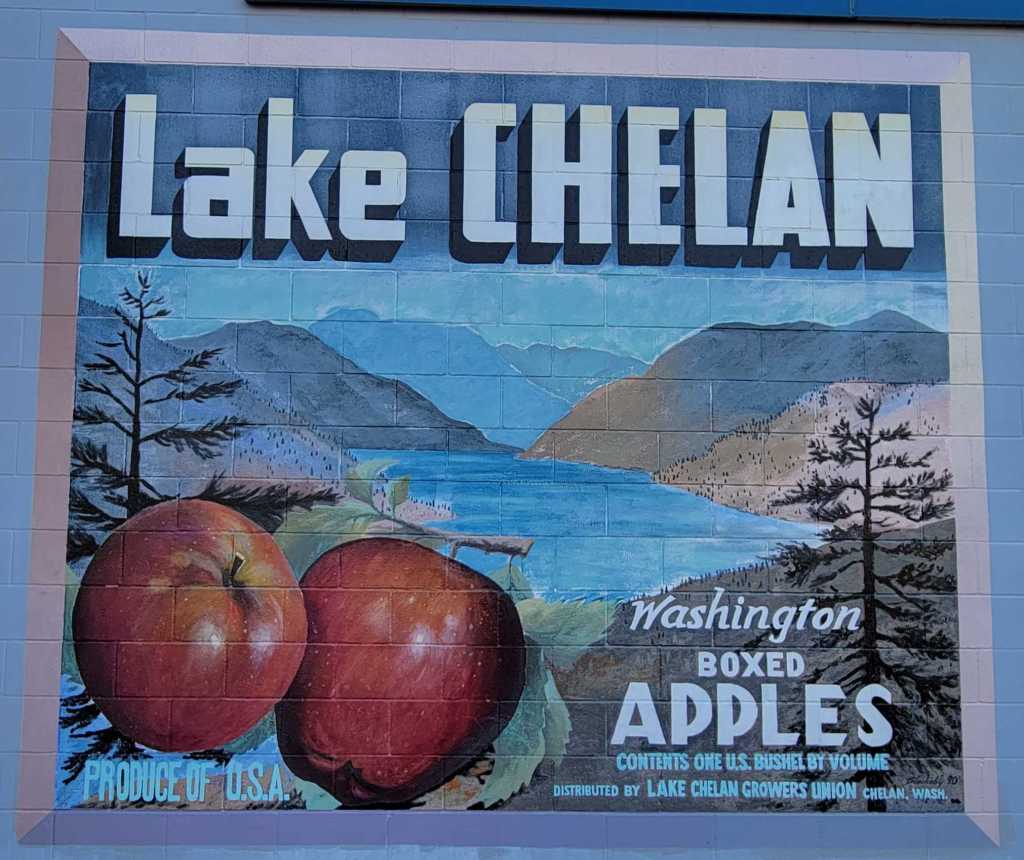
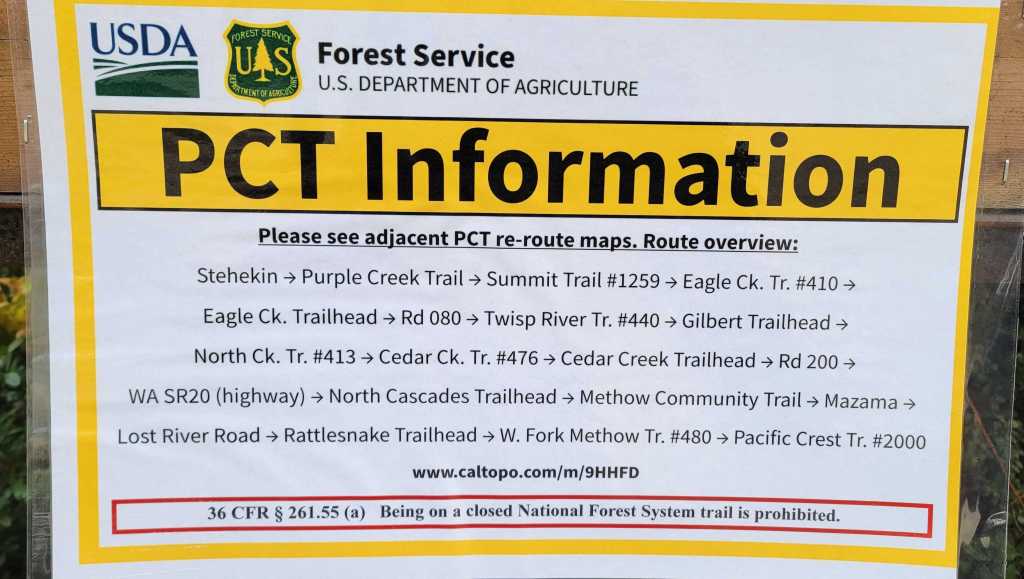
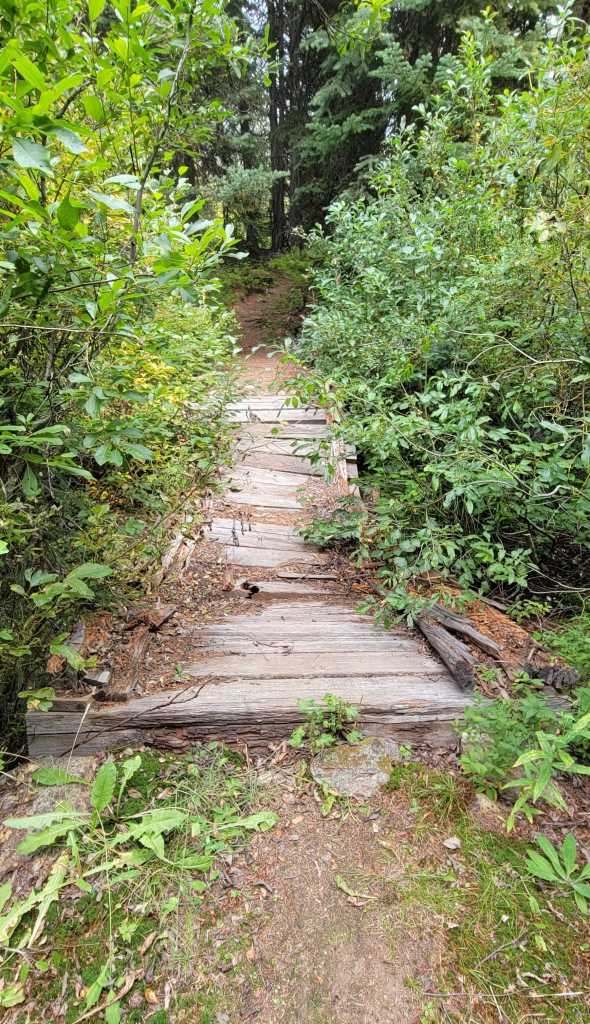
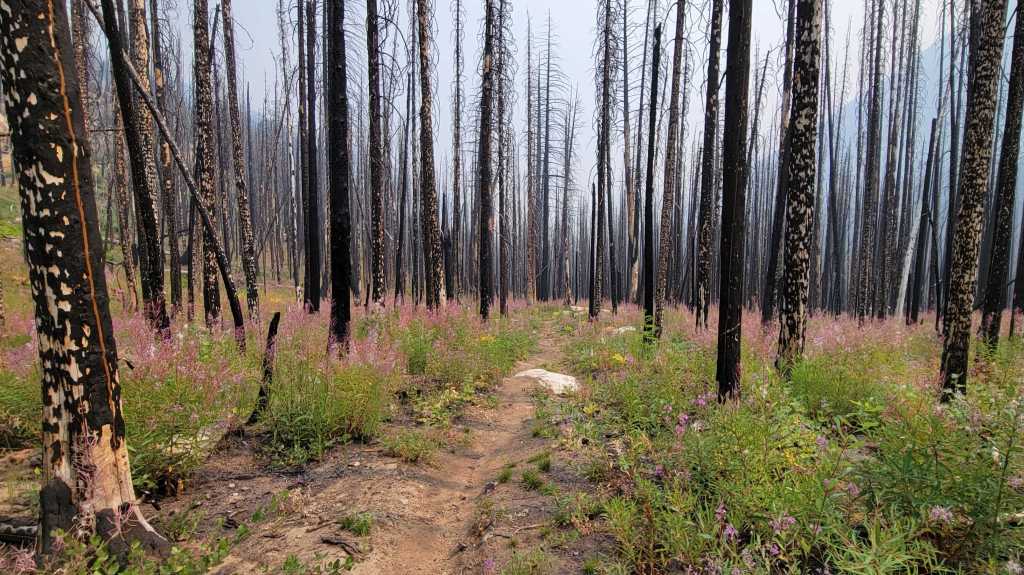
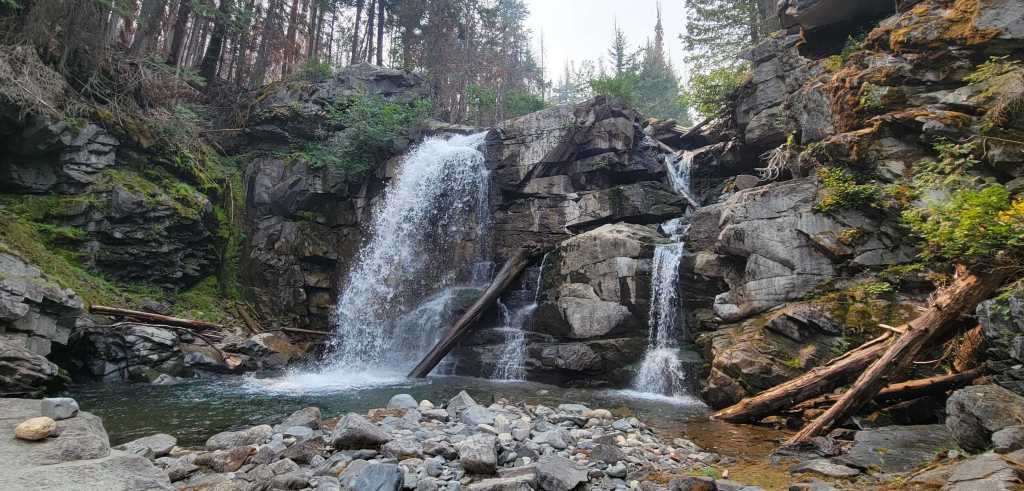
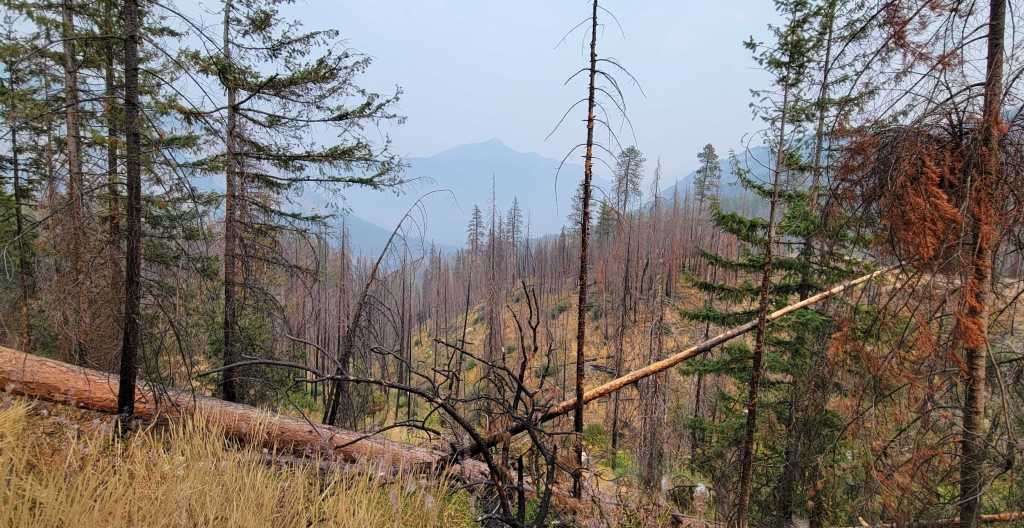
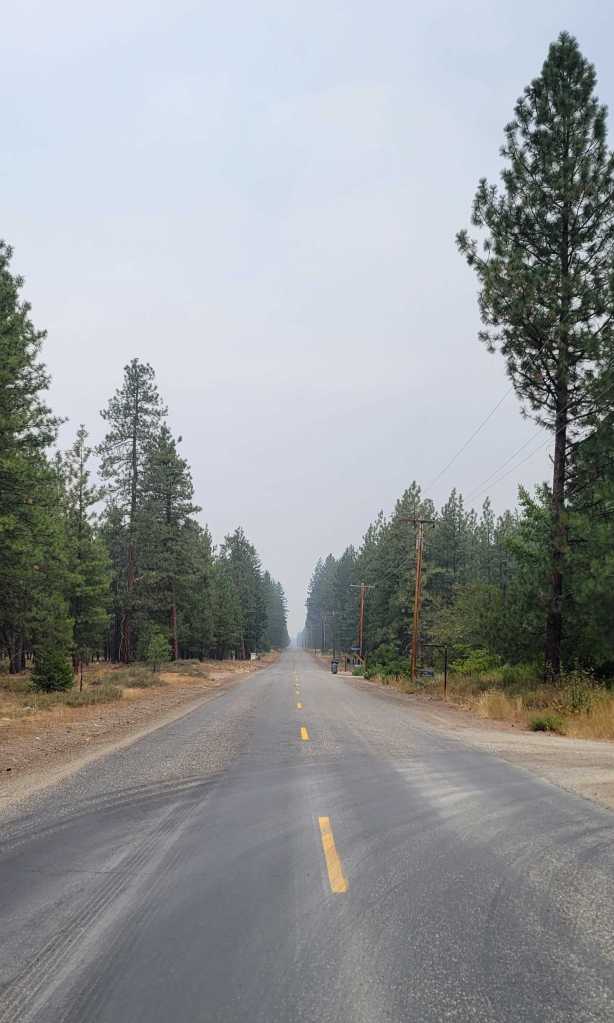
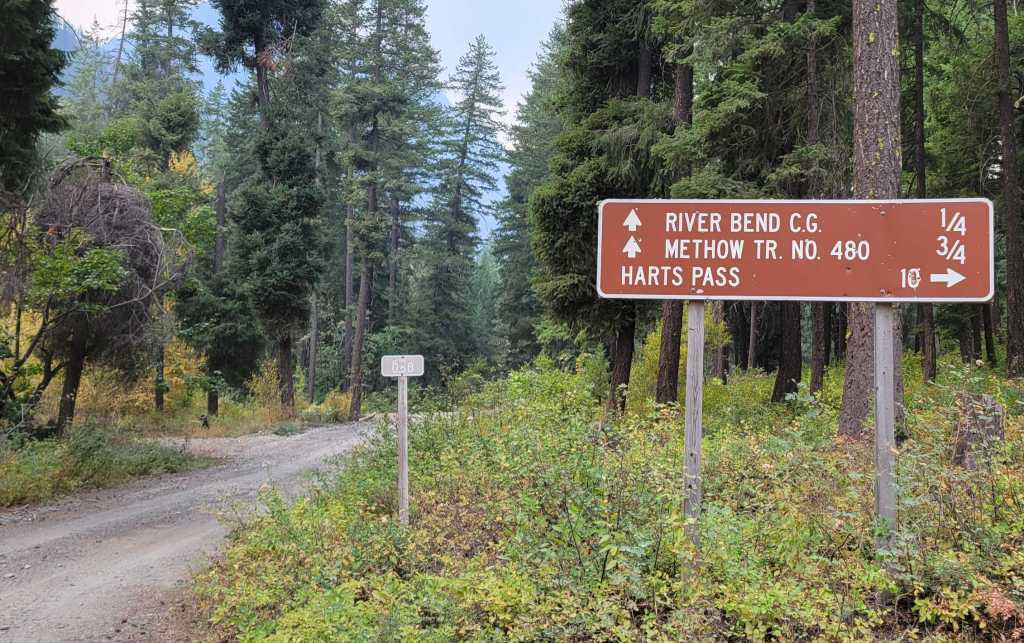
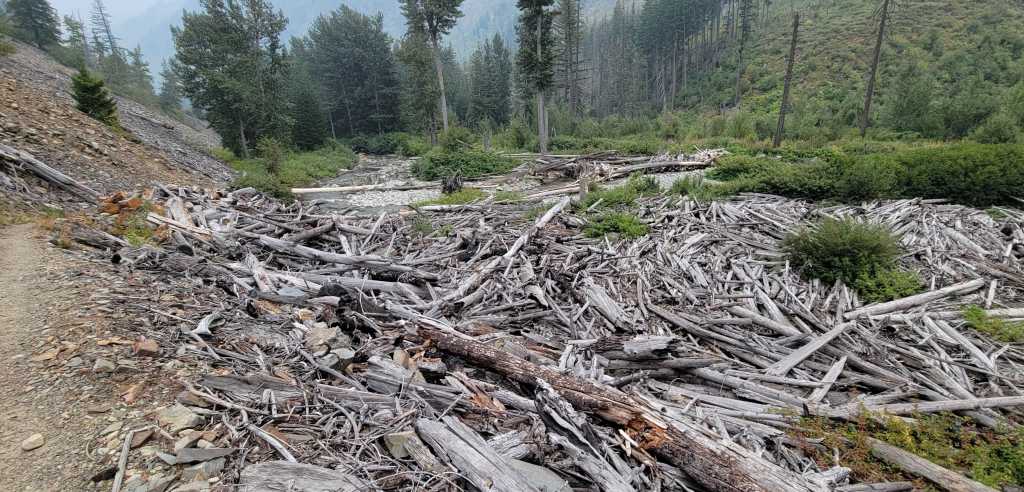
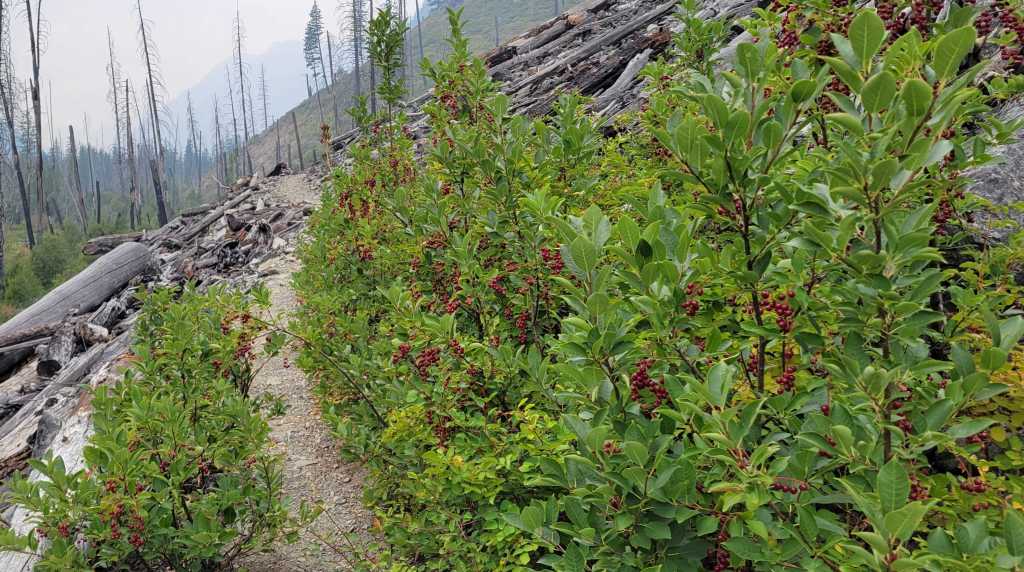
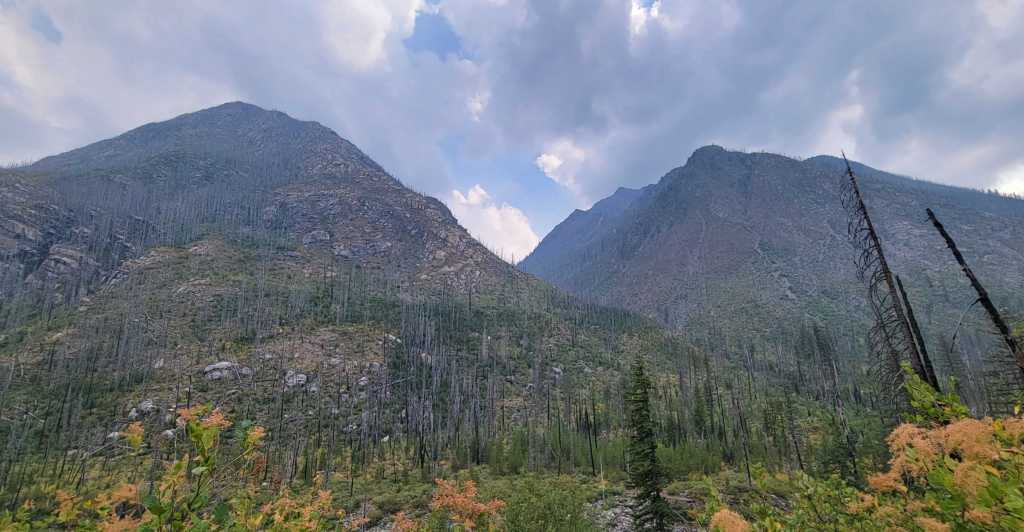
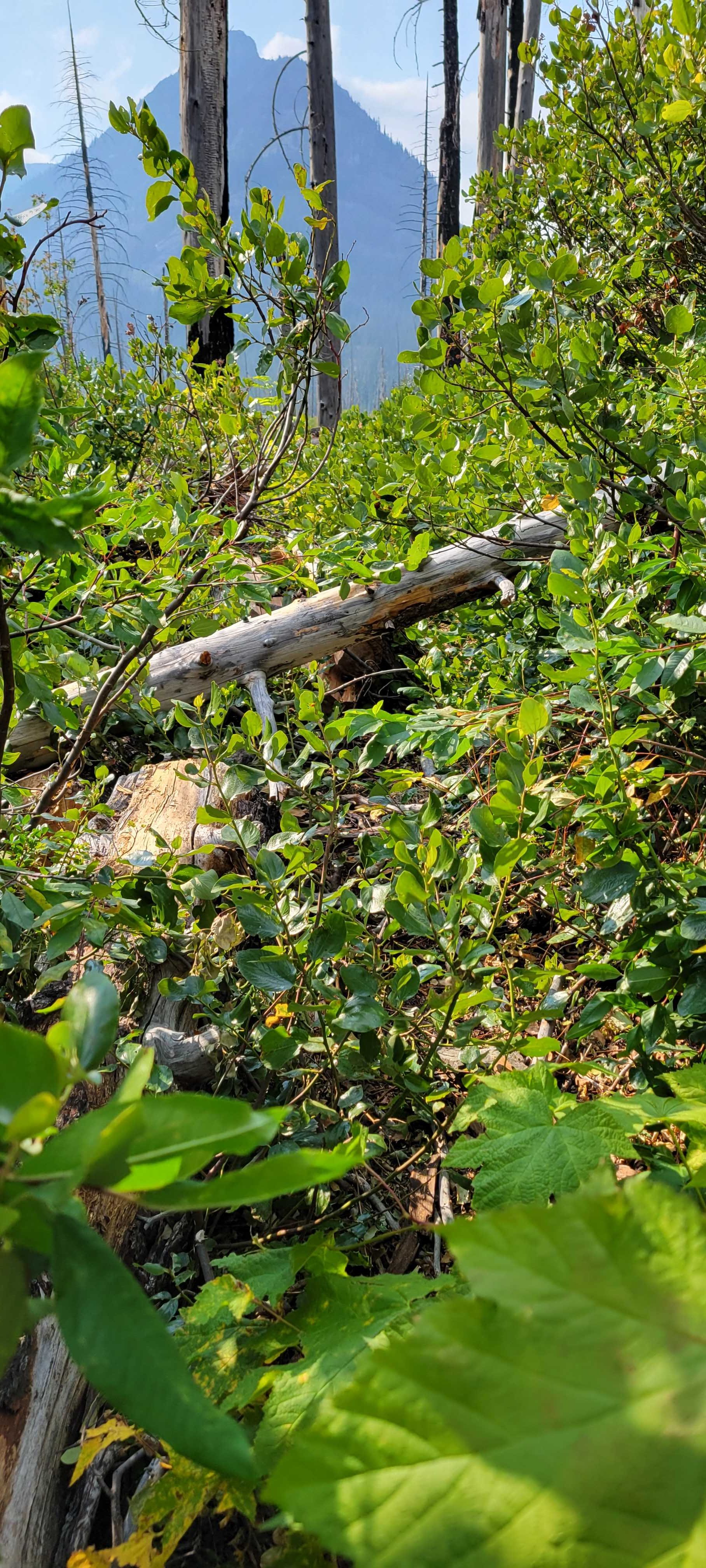
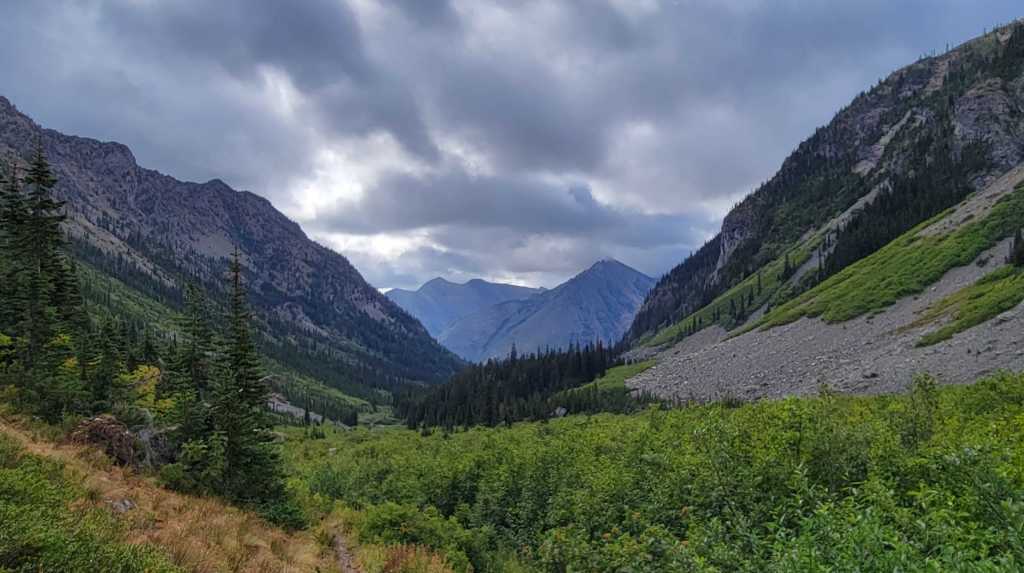
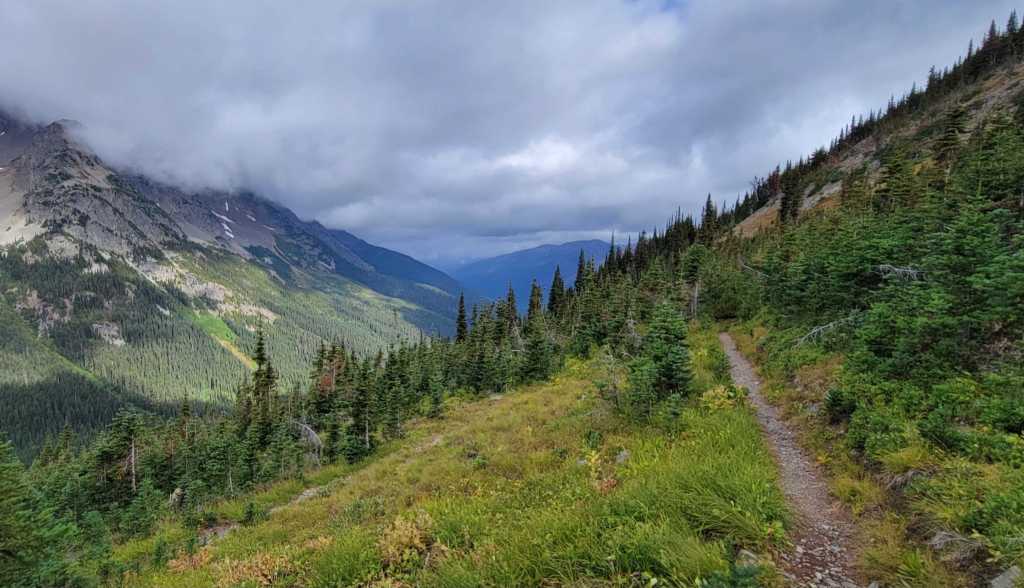
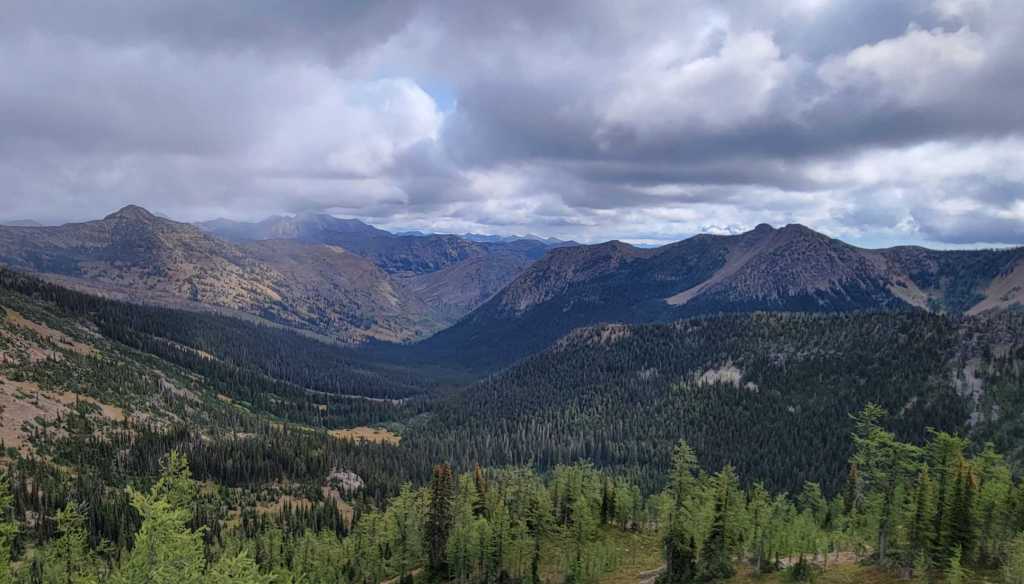
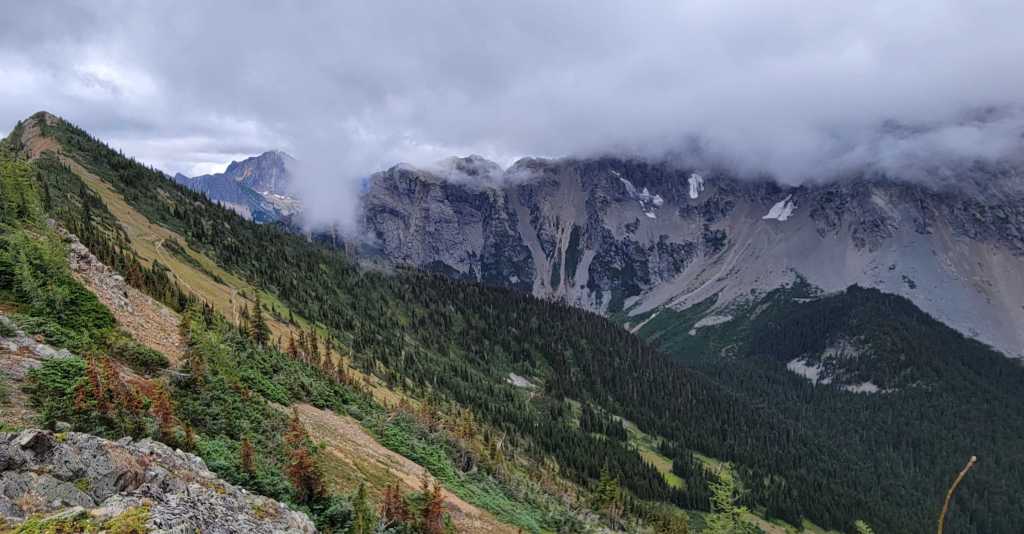
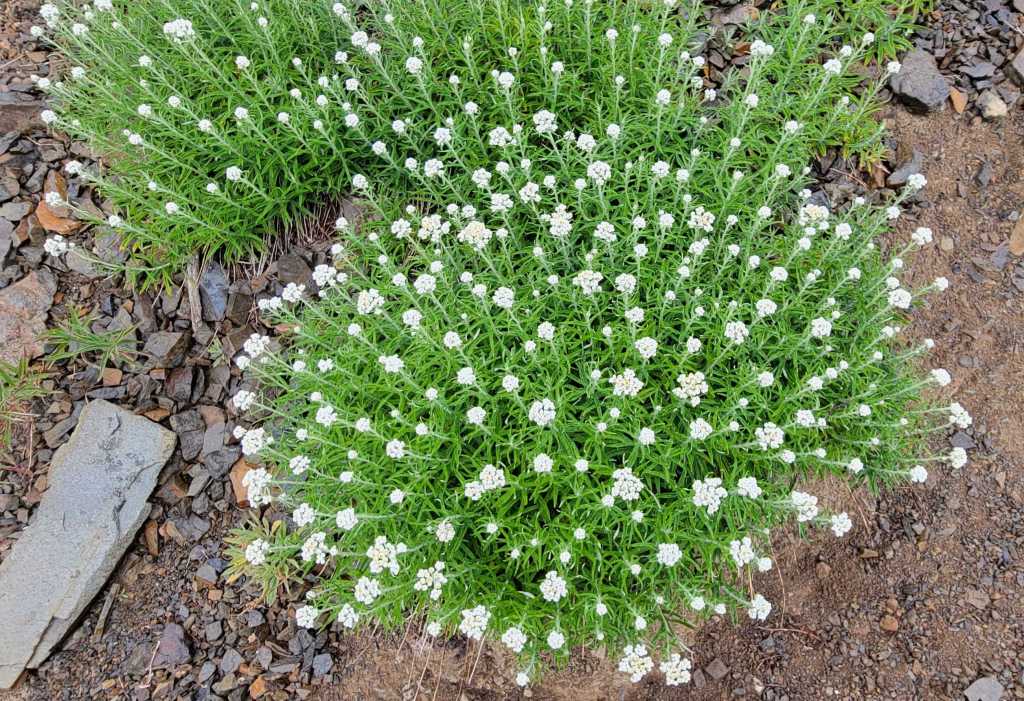
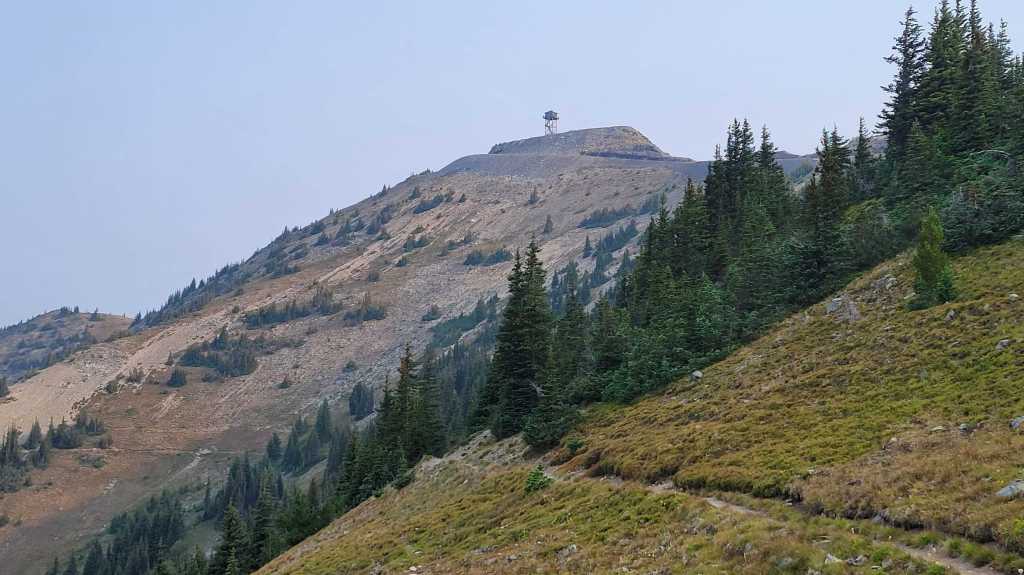
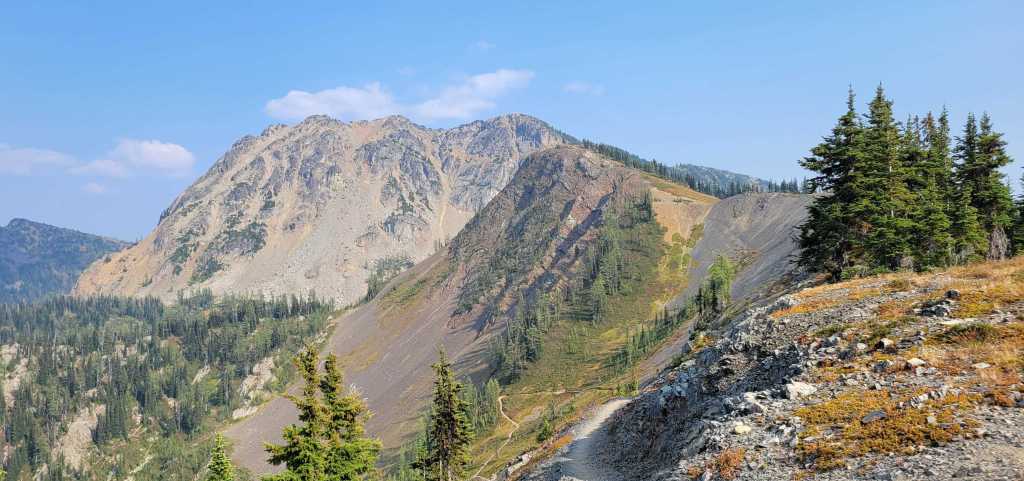
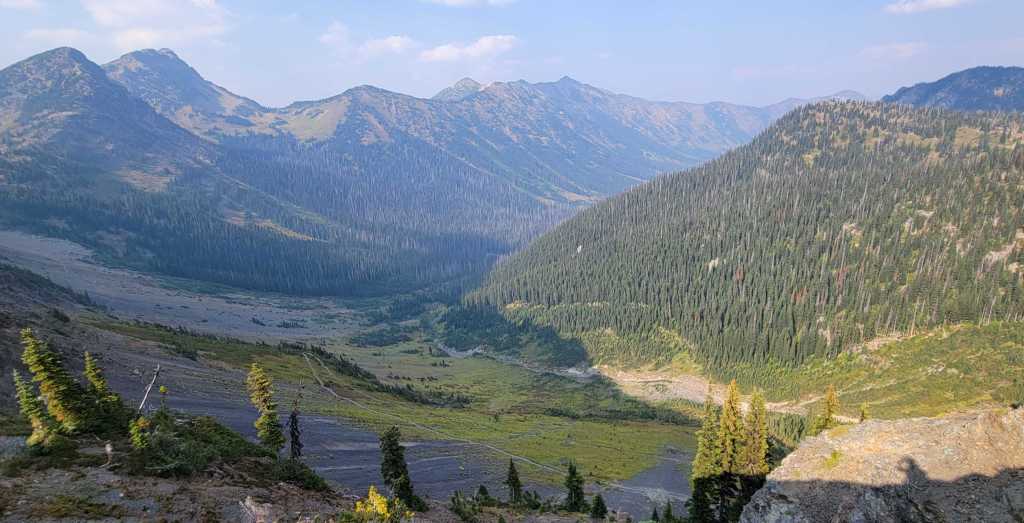
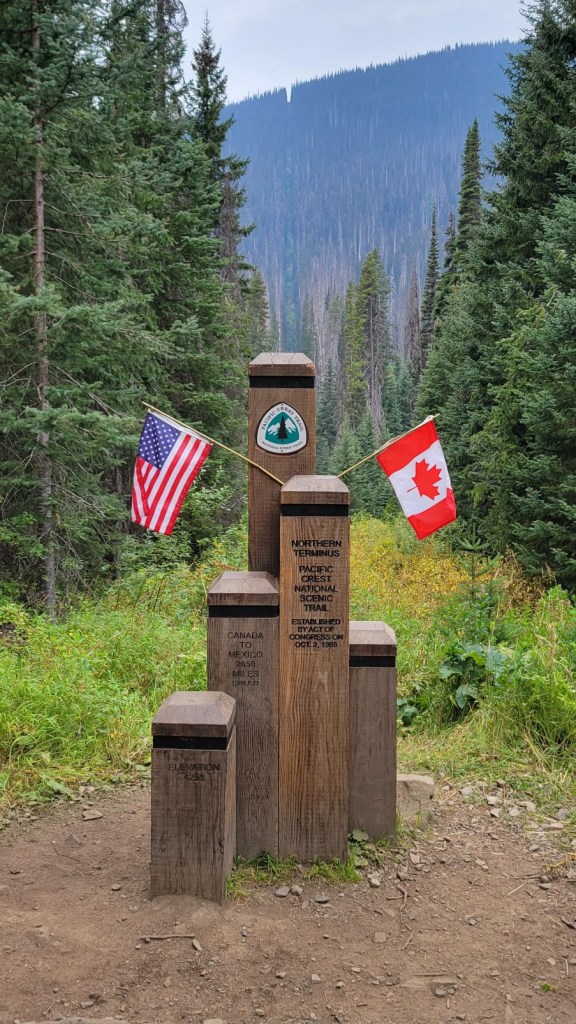
My final days on the PCT began at Stehekin, which is on the north end of Lake Chelan and only reachable by ferry.This diorama shows how rugged the Northern Cascades are. The blue lake to the right is Lake Chelan.The climb out of Stehekin on the 70-mile PCT detour required a 5700-foot climb from Lake Chelan up to Purple Pass. It was a hot and sunny day. By the time I reached the top, I was exhausted.Just after Purple Pass, I saw a section hiker. I was so exhausted I was barely coherent when I spoke to him.The view from my campsite at Juanita Lake. The lake is actually a tiny pond.I stopped at this campsite for a snack.Smoke in the air from the multiple fires in Washington state.Chokeberry?“Really, it’s a very simple detour.”Rocky slopeThis bridge has seen better days.Not entirely safe. The trunk slabs are not buried in the ground. They are resting on the ground and therefore wobbly.Walking through an old burn zone to get around an active burn zone.Trail constructionCedar Falls — upper falls.Cedar Falls — lower falls.Nearing Washington Route 20Washington Route 20 — just west of here the road was closed due to wildfire.A brave squirrel. He watched me as I walked by.Early morning — smoke in the sky near the town of Mazama.Lost River Road — the detour followed this road from Mazama, through a rural area, and then into the National Forest.In the National Forest.Log bridgeWood debris in the West Branch of Methow RiverMore berriesSame berry as above, but more mature.These are pyracantha berries, I believe.Wood debris knocked this bridge out.Beginning the climb back to the PCTThe entire canyon was burned overThis is the trail. Lots of undergrowth.And blowdowns, tooBack on the PCT after a 70-mile detour.Brush Creek campsiteViews on a stormy dayAlas, I am not a wildflower expert.Fire tower on Slate PeakGetting close to CanadaHopkins LakeBorder marker — frontBorder marker — back. 78 miles from the Strait of Georgia (arm of Pacific Ocean). Markers have been placed every mile on the US/Canadian border, which follows the 49th Parallel.
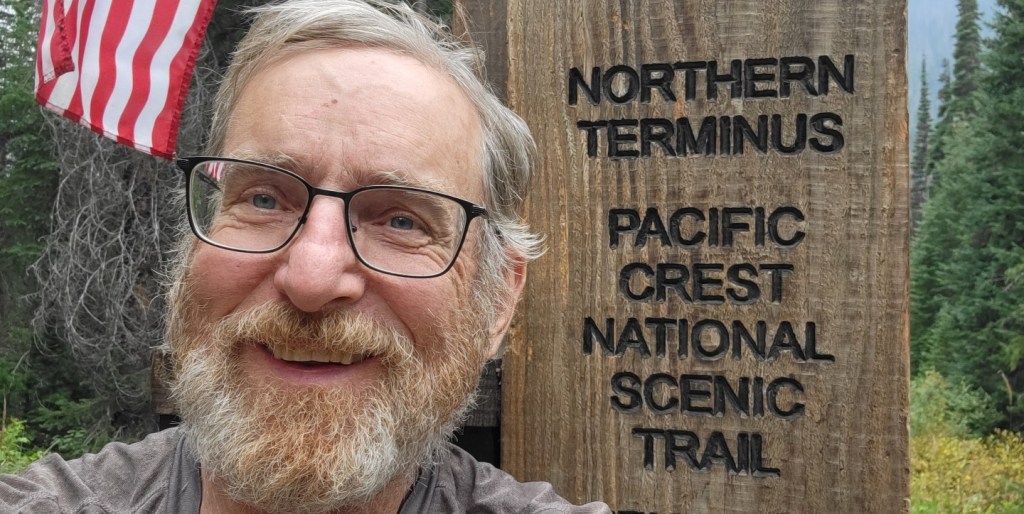
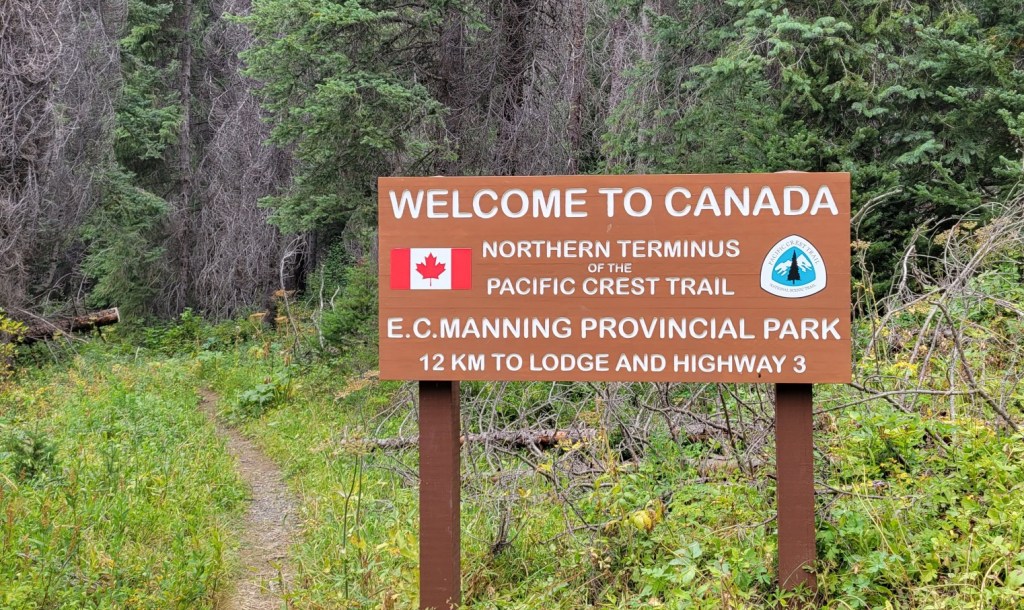
My three-year PCT thru hike is over. I reached the Canadian border yesterday, 8/25/23. Success!
I began my thru hike hike on 4/3/21. I hiked 1840 miles in 2021, 733 miles in 2021, and 122 miles this year (thanks to a 70 mile wildfire detour which added 41 extra miles of walking).
I’m glad to be done. My wife Marta is glad I’m done as well. Time to return to our previously scheduled marriage.
When I get home, I’ll post photos from this last section of trail in northern Washington. Some videos as well.
What’s next? Not any true long distance hiking. I’ve promised my wife that. Nothing more than two to three weeks at most. Also, I’ve discovered I want any short distance hiking I do to include family and friends if at all possible.
I will tell you that I’m writing a book called “Two Trails.” It compares and contrasts hiking the Appalachian Trail in 1977 at the age of 20 and hiking the PCT in the 2020’s while in my mid-60’s. It talks about the differences in the two trails, the differences in hiking technology now vs. then, and much more.
I’m 60,000 words into the book right now and expect the finished product to be 80,000 to 90,000 words long. I’ll let you know when I’m done and how to get a PDF version if you’re interested. (I’m not sure anyone will truly want to publish it.)
Thank you for your interest in this blog. Thank you for your support along the way. I wish you all the best.
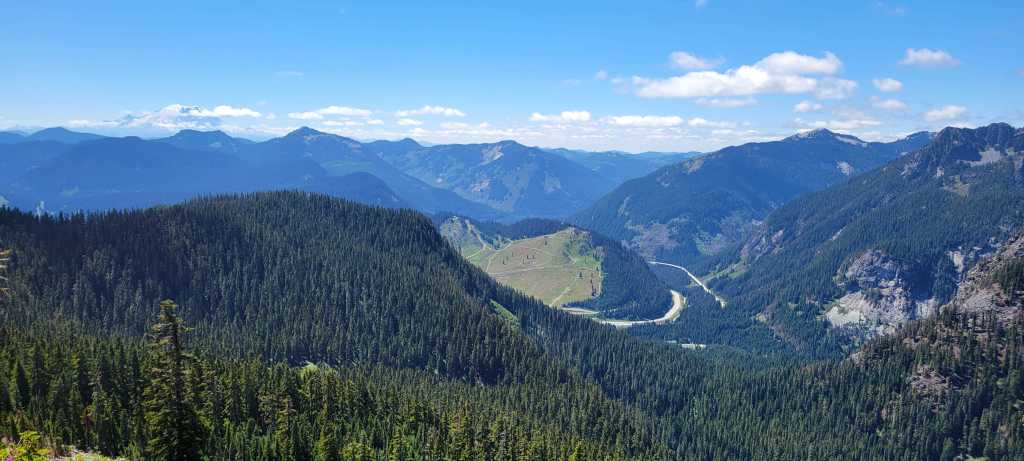
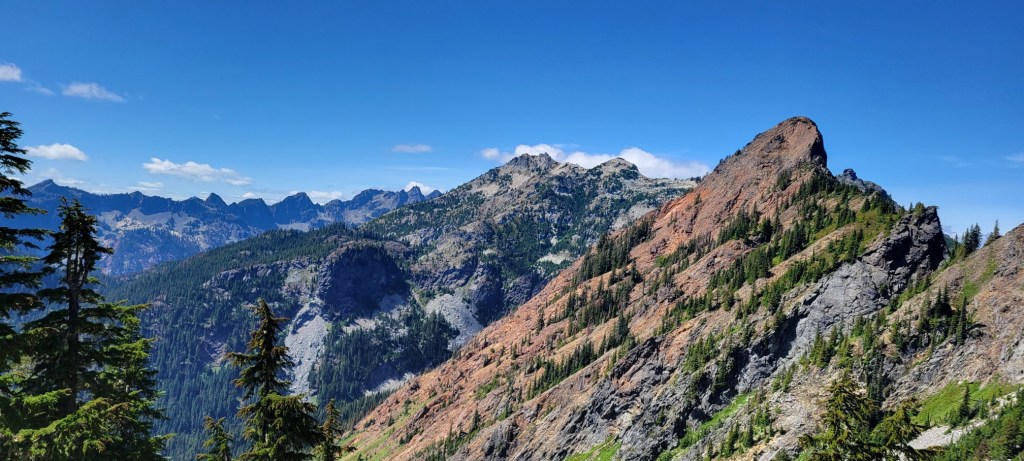
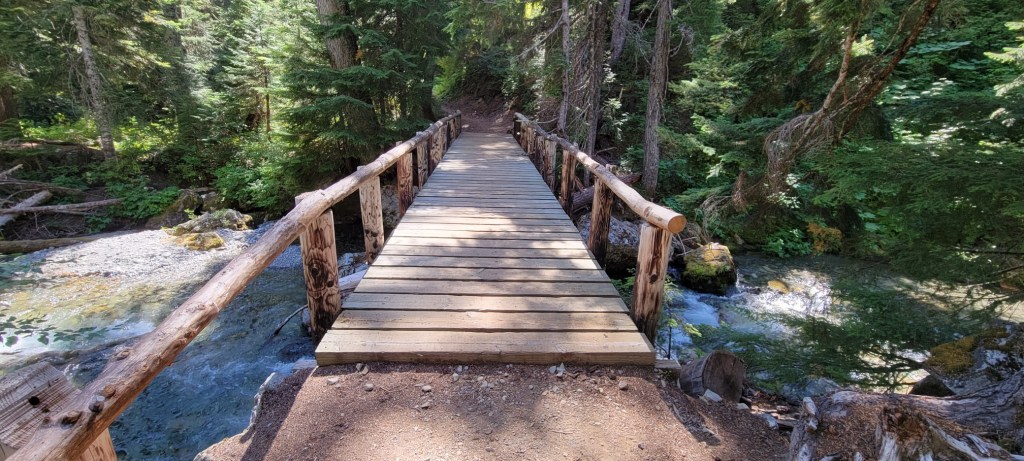
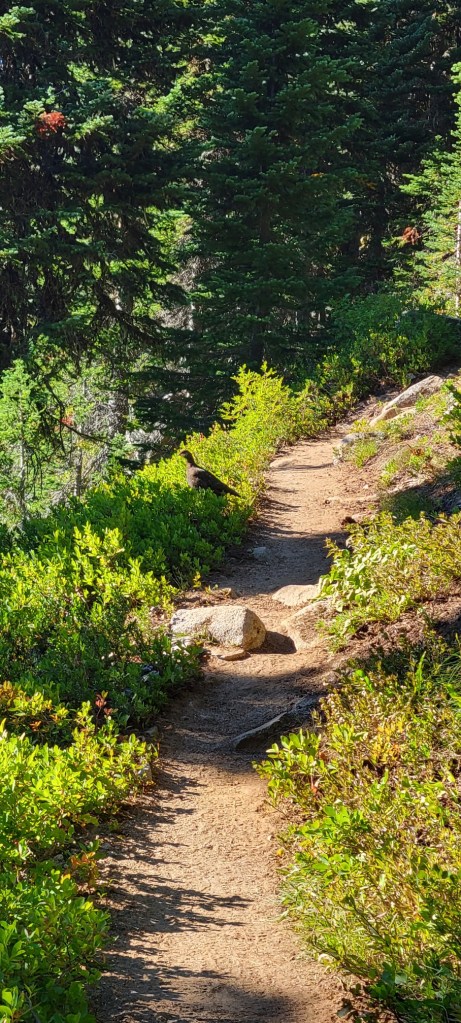
The rugged Northern CascadesSnow in the summerAlpine lakesMt. Rainier in the distanceCathedral PeakWooden bridge over a mountain creek“Larry the Log,” an Iraqi War veteran is carrying a 20-pound log on his shoulder from Mexico to Canada on the PCT to raise money for St. Jude’s Hospital. Last year, he did the same thing on the Appalachian Trail. Next year, he plans to do the same thing on the Continental Divide Trail.A “wood chicken”
I’m sitting here in Seattle Tacoma Airport (SeaTac) waiting for an airport shuttle that will get me back to the PCT. I left the trail yesterday thinking my 2023 hike was over before it truly began.
I started my 2023 hike last Friday, not where I ended my 2022 hike, but farther south. I ended last year at Stehekin, 80 miles from the Canadian border. I started this year at Snoqualmie Pass, 260 miles from the border, because I wanted the chance to reexperience the beautiful northern Cascades.
My plan was to hike 70 miles from Snoqualmie Pass to Stevens Pass through the Alpine Lakes Wilderness. Then 110 miles from Stevens Pass to Stehekin through the Glacier Peak Wilderness. Then 80 miles from Stehekin to Canada through the Pasayten Wilderness.
What a mistake!
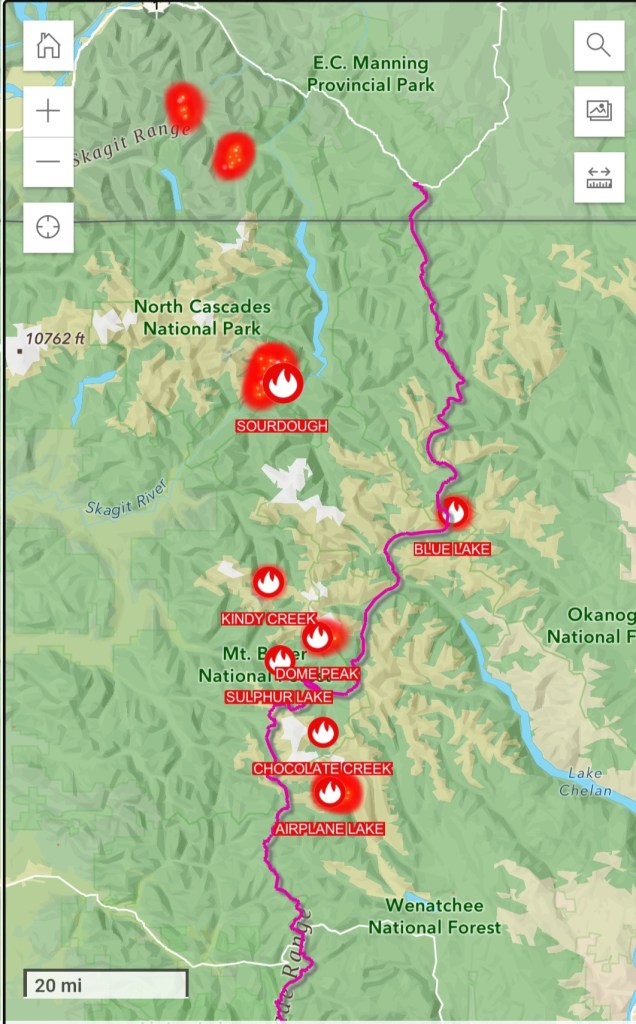
Why? Because a series of wildfires have broken out near the trail in Washington. This map shows the picture.
The purple line is the PCT. The squiggly white line at the bottom is US Route 2. The trail crosses Route 2 at Stevens Pass. The straight gray line at the top is the Canadian border. At the north end of the blue fjord-like Lake Chelan is Stehekin.
As you can see, there are five fires on either side of the trail between Stevens Pass and Stehekin plus one fire beside the trail between Stehekin and Canada. The Dome Peak Fire has closed a portion of the trail south of Stehekin. The Blue Lake Fire has closed a portion of the trail north of Stehekin.
I knew none of this until I reached Stevens Pass two days ago. When I found out the trail ahead was closed, I was distraught. Yet again, my multi-year thru hike was being impacted by wildfire. I was also pissed at myself.
As you may recall, I ended my 2022 hike at Stehekin because the trail ahead was closed by fire, with no practical way to get around it. And in 2021, I stopped at Santiam Pass, Oregon because of extensive closures ahead in the Mt. Jefferson Wilderness due to fires which took place there in 2020.
Why was I pissed at myself? Because if I’d started at Stehekin last Friday instead of Snoqualmie, I would have been through the fire zone before most of the fires had started and any of the trail was closed.
My desire to have a longer hike — I call it greed — had bit me in the butt. My wife had been wondering why I was doing this. She kept asking, “Why don’t you just go hike the part you have left? Then go back and hike the other parts you want to do over?” She was right. (I know. Isn’t that always the case?)
Learning the trail ahead was closed, I hitched from Stevens Pass to Leavenworth to spend the night in a motel. Then I took a bus from Leavenworth yesterday to SeaTac to fly home. I thought I’d have to wait until 2024 to finish this adventure I started back in 2021.
Last night, however, I learned there is a detour one can take around the closed PCT sections to make it to Canada. I’m now headed back to the trail to take that detour. Instead of going back to Stevens Pass, I’m headed to Stehekin. I’ll start my detour there. I’m hoping this is a true “reprieve from the governor” and there won’t be any more fires and closures before I make it to Canada. We’ll see.
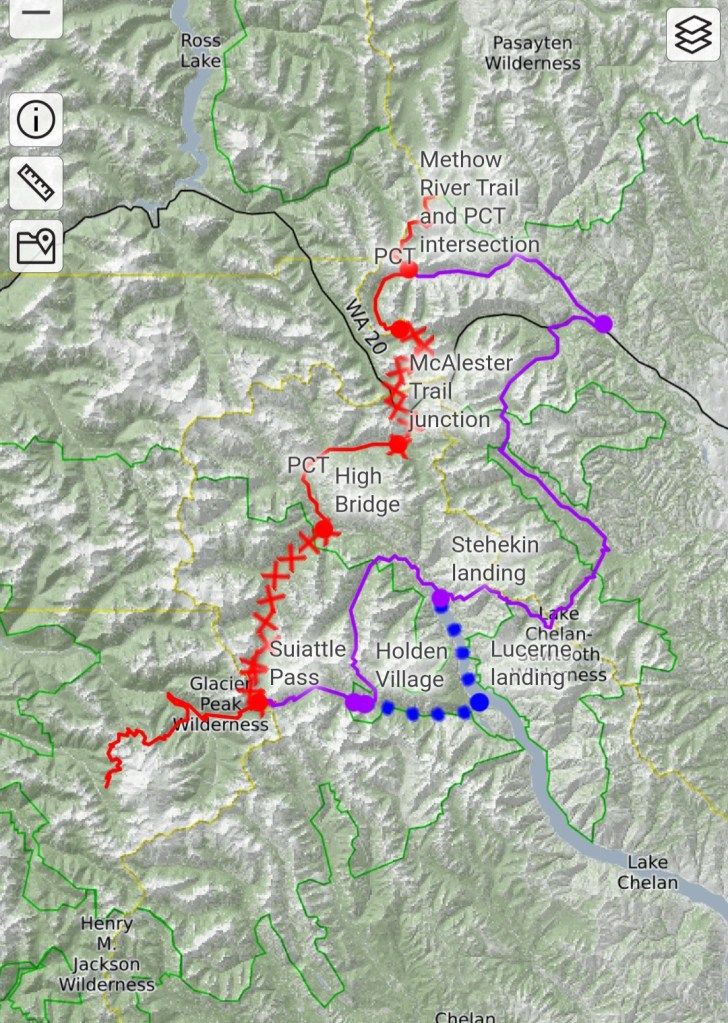
Here’s a map which shows the closures and the detour I’ll be taking.
In this map, the red line is the PCT. The X’s on it are the closed portions of trail. The purple line is the detour, which uses other hiking trails in the area. The blue dots are an alternate detour one can take which makes use of ferry service on Lake Chelan.
I’ll restart my hike at “Stehekin Landing” and follow the detour from there, north to the Methow River Trail junction with the PCT. The detour route I’ll follow is 70 miles long. Then I’ll have 43 miles of the PCT tobfollow to get to the border.
The combined 113 miles adds an extra 33 miles of hiking. If it means reaching Canada and ending this three-year quest, I’ll gladly take it. Wish me luck. Let’s hope the hiking gods are more powerful than the fire ones.